

Selecting the Best Crochet Bag Yarn for Handles
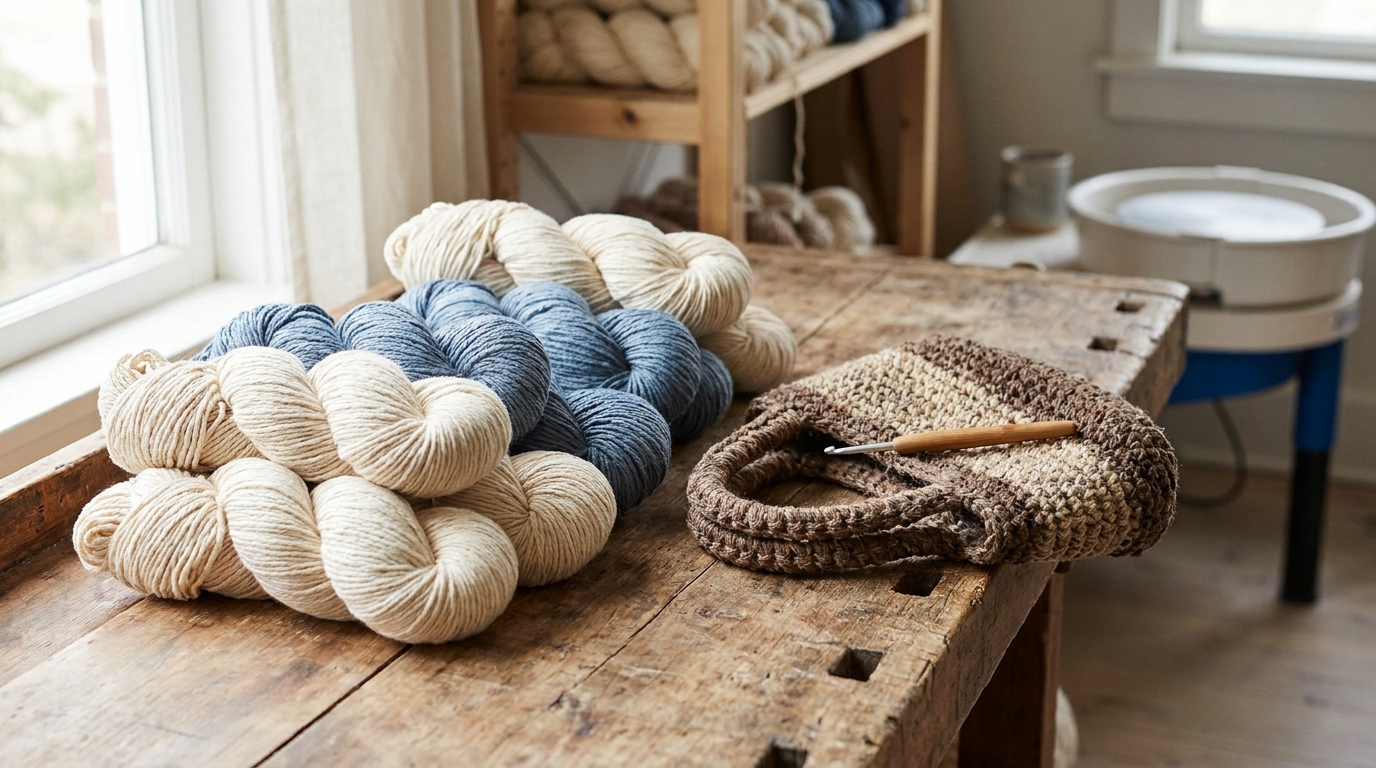
The material you choose dictates the lifespan of your crochet purse handles. If the fiber stretches too much, the handle will quickly lose its shape under weight. Selecting the right fiber is the first step toward a durable finish.
Cotton yarn is the gold standard for structural projects. It offers low stretch and high strength, keeping your handle firm. In contrast, acrylic and wool fibers naturally stretch. These softer materials are prone to sagging when carrying heavier items.
Using a dedicated crochet bag yarn ensures maximum structural integrity. These yarns are tightly spun to resist fraying and stretching. Our artisans at HANDBRAID rely on sturdy fibers to guarantee that every handbag maintains its practical use.
For the strongest crochet tote bag handle, try crocheting directly over a core material. Wrapping your stitches around macrame cord or nylon webbing completely eliminates unwanted stretch. This technique hides the core while providing a solid, unyielding foundation.
Popular Styles for Crochet Handbag Handles
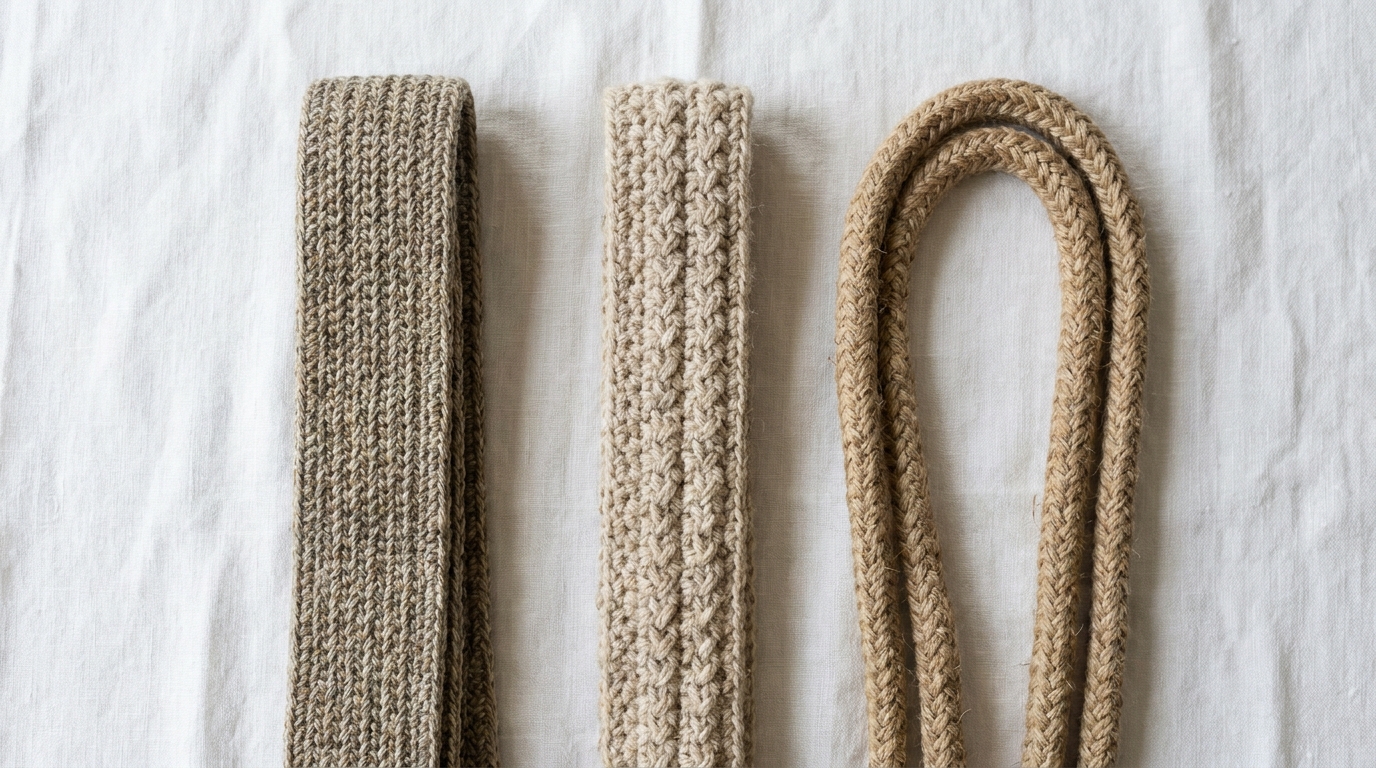
Matching your stitch pattern to your yarn choice is crucial. The technique you select directly impacts the strength, shape, and comfort of your handles. When crafting a premium crochet bag, consider exactly how the strap will be used.
Romanian Point Lace Cord
The Romanian Point Lace cord is highly favored for heavy-duty bag making. It creates a thick, rigid, and flat strap that closely mimics woven materials. This dense structure naturally resists stretching, making it an excellent choice for carrying heavier loads without warping. You work this cord by continuously turning the piece and crocheting into the side loops.
Thermal Stitch Straps
If you need a wider strap for shoulder comfort, the thermal stitch is ideal. This technique works into the current row and the unworked loop of the previous row simultaneously, resulting in a dense, double-thick fabric. A thermal stitch strap distributes weight evenly, preventing the handle from digging painfully into your shoulder.
I-Cord and Tubular Crochet
For a classic finish, consider an I-cord or tubular crochet pattern. These techniques produce rounded crochet handbag handles that are comfortable to grip. While they offer a beautiful rope-like aesthetic, they tend to stretch more than flat cords. Inserting a hidden core inside the tube easily solves this limitation.
Compare these popular styles to choose the right fit for your project:
| Handle Style | Flexibility | Aesthetic Appeal | Load-Bearing Capacity |
|---|---|---|---|
| Romanian Point Lace Cord | Low (Very rigid) | Flat, tightly woven look | High |
| Thermal Stitch | Moderate | Thick, textured flat band | High |
| I-Cord and Tubular | High (Prone to stretching) | Rounded, rope-like finish | Moderate (High if using a core) |
Step-by-Step Guide: Crafting the Strongest Crochet Tote Bag Handle
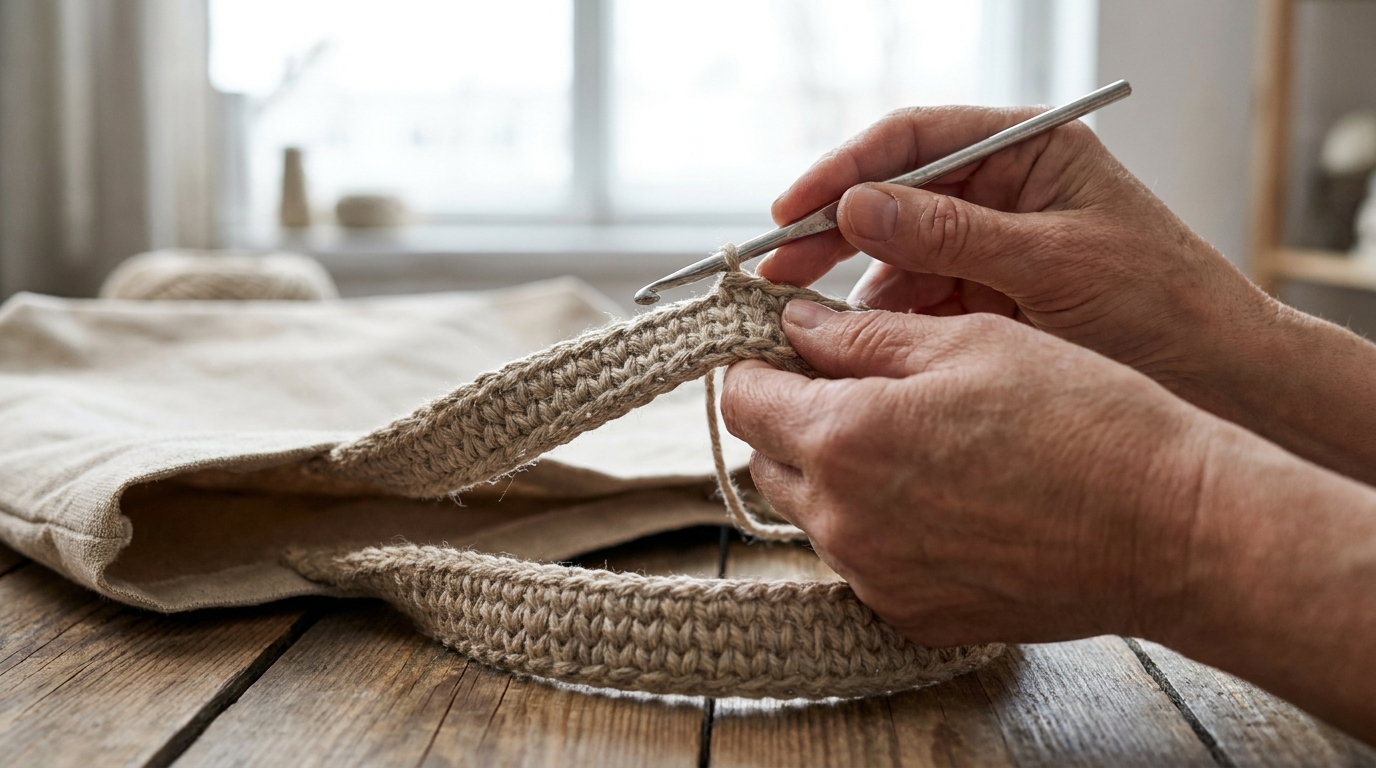
Now that you have selected your yarn and stitch pattern, it is time to crochet. Our factory’s craftsmanship relies on precise techniques to ensure lasting durability. Follow these steps to build a reliable strap for your tote.
Step 1: Measure and Plan
Determine the ideal length and width for your specific tote design, accounting for a slight natural stretch over time. A standard shoulder strap usually measures between 30 and 40 inches, while shorter top-handle bags require only 12 to 20 inches.
Step 2: Foundation Chain
Create your foundation chain based on your planned length or width. Ensure your tension is noticeably firmer than the rest of the bag body. A tight foundation prevents the edges from flaring outward and provides a strong anchor for your first row.
Step 3: Build the Rows
Work your chosen stitch across the foundation. Using standard single crochet or the thermal stitch builds a dense, unbreakable fabric. Keep your stitches tight and consistent. If your tension loosens, the strap will become weak and prone to sagging.
Step 4: Reinforce the Edges
Once you reach the desired width, do not fasten off immediately. Add a final border of slip stitches around the entire perimeter of the strap. This technique locks the shape in place, eliminates edge curling, and creates the strongest crochet tote bag handle possible.
Step 5: Leave Long Tails
Fasten off your yarn, but leave an extra-long tail on both ends. You need this excess yarn to securely sew the handle to the bag body. A longer tail allows for multiple passes through the fabric, ensuring a permanent, load-bearing attachment.
How to Attach Crochet Purse Handles Securely
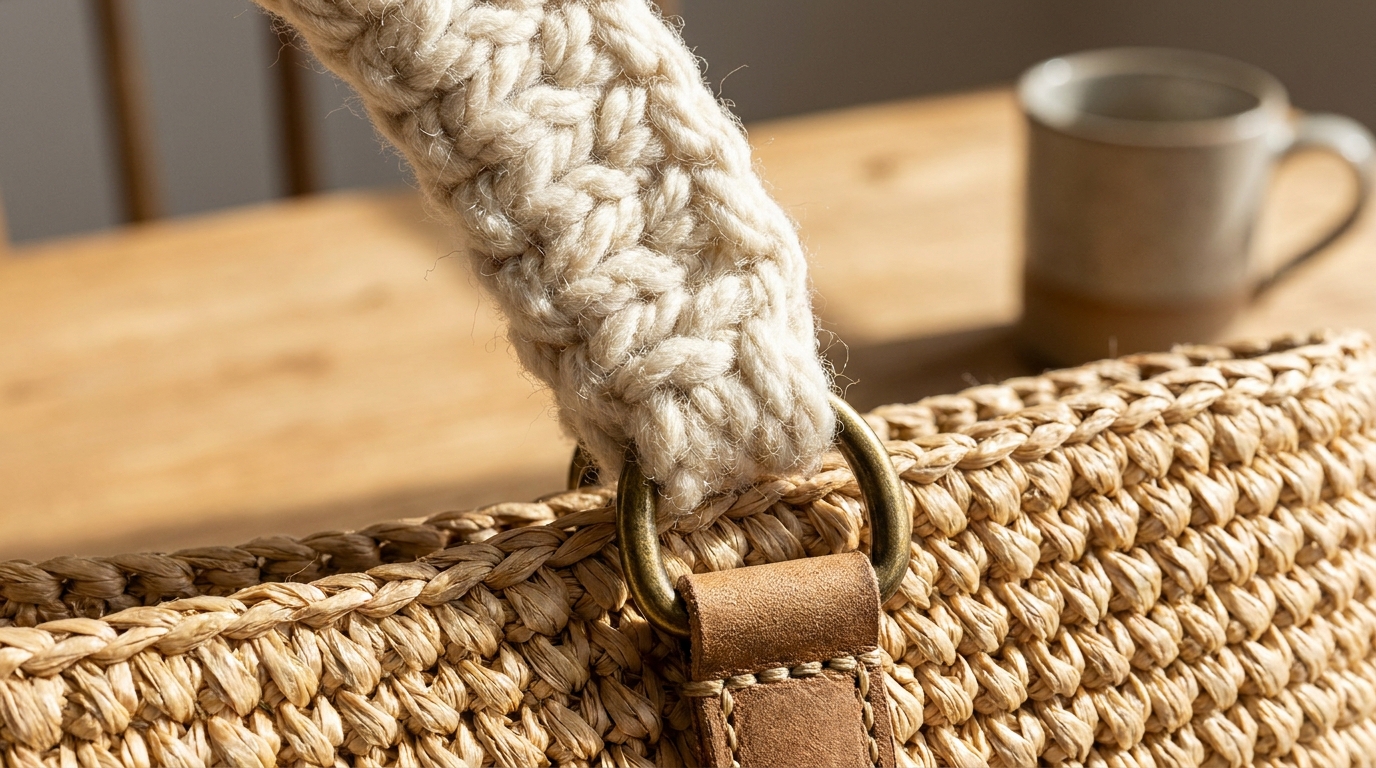
You have crafted a dense, durable strap. Now, you must secure it properly. The attachment point bears the entire weight of your bag. At HANDBRAID, our 500 skilled artisans ensure every connection point is flawless. Choose one of these three reliable attachment methods.
Method 1: Direct Crocheting
Direct crocheting creates maximum structural unity. Instead of making a separate strap, you crochet the handle directly into the top rounds. Chain the desired length, skip a section of the bag rim, and reattach the chain. In the next round, work dense stitches over this chain. This seamless approach prevents weak joints entirely.
Method 2: Sewing
If you made a separate strap, sewing is required. Thread a tapestry needle using the long yarn tails you left earlier. Use a secure whip stitch to anchor the handle. Always sew through the actual yarn fibers, not just the gaps. Distribute the weight across multiple rows of the bag body to create a broader, stronger anchor.
Method 3: Hardware Integration
Hardware adds a professional finish to crochet purse handles. You can attach metal D-rings, O-rings, or lobster clasps to the bag body. Then, loop your crochet strap through the hardware and stitch it closed. This method allows for detachable handles and reduces yarn-on-yarn friction, extending the life of your bag.
Risk Factor: Tearing Under Heavy Loads
Never attach your handles to a single row of stitches. A single row cannot support the weight of a full bag. The concentrated tension will stretch the yarn and eventually tear the fabric. Always anchor your straps deep into the bag body across at least three to four rows to distribute the pulling force safely.
Common Mistakes to Avoid When Crocheting Bag Handles
Even with the right materials and attachment methods, small errors can compromise your bag’s functionality. Avoiding common pitfalls ensures your straps remain durable and comfortable.
Using an Oversized Crochet Hook
Many crafters use the same hook for the bag body and the straps, which often results in loose stitches. A handle requires dense, tight fabric to support weight. If your hook is too large, the stitches will stretch excessively over time. Always drop down one or two hook sizes when crafting your straps.
Twisting the Foundation Chain
When crocheting a continuous loop handle, a twisted foundation chain ruins the structure. If the chain twists before you join the ends, the strap will never lay flat against your shoulder. Run your fingers along the entire chain to ensure all stitches face upward before making your joining slip stitch.
Ignoring Yarn Friction
Everyday use creates constant friction against your shoulder and hands. Selecting a fiber that pills or frays easily will quickly degrade the look of your bag. Stick to tightly spun yarns that resist surface wear, as delicate fibers cannot withstand constant rubbing.
Failing to Test Weight Capacity
Never permanently secure your straps without testing them first. At HANDBRAID, our artisans rigorously test handle durability before finalizing any design. Pin the handles to your bag body using sturdy stitch markers and load the bag with your typical daily items. This practical test reveals how much the handle stretches under real tension and confirms whether the weight distribution feels comfortable.
Sourcing Excellence: Partnering with a Professional Crochet Bag Supplier
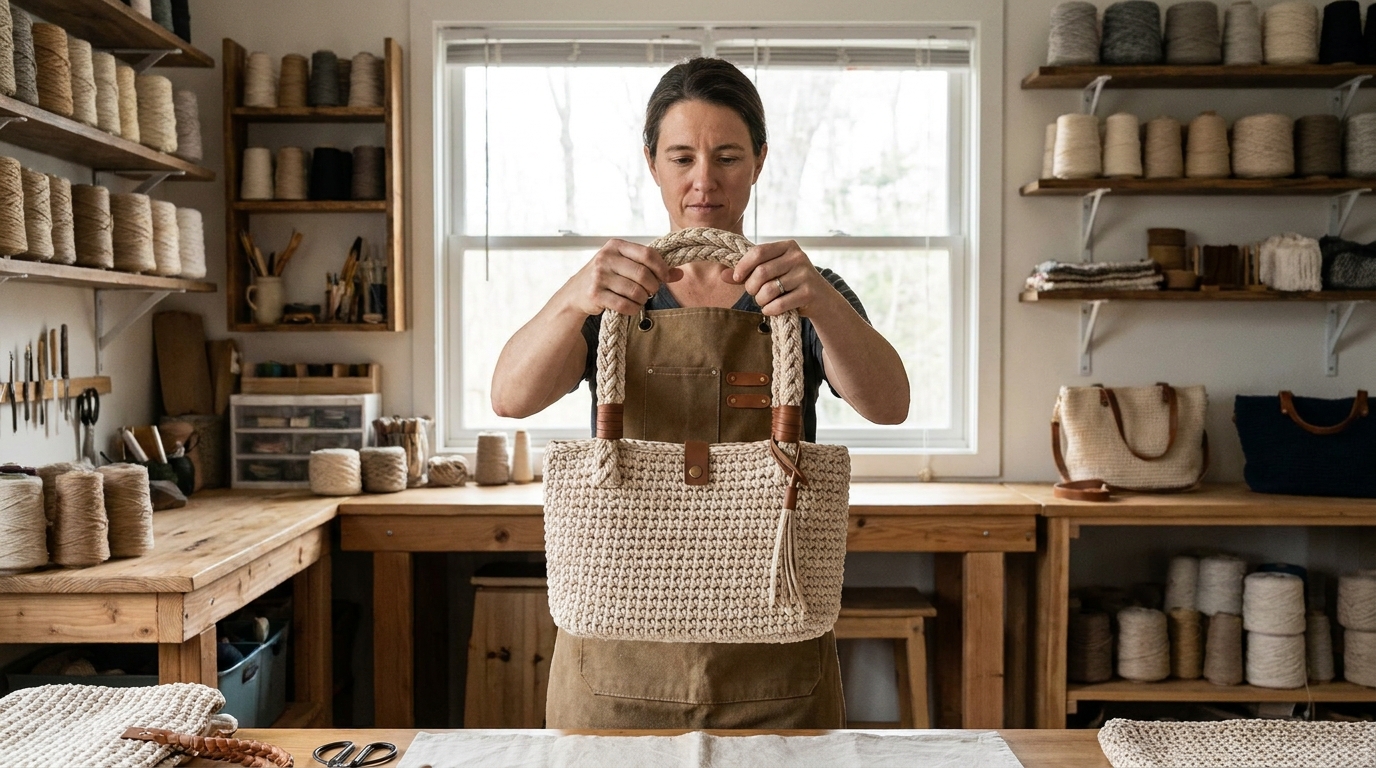
Transitioning from personal DIY projects to commercial retail requires reliable manufacturing. Scaling a business demands consistent quality across hundreds of items. Retailers and wholesalers need a dependable crochet bag supplier to meet customer demand without sacrificing durability.
Since 1994, HANDBRAID has stood as a leading figure in the handcraft industry. Our factory relies on 500 skilled artisans who are the backbone of our success. When you partner with an established manufacturer, you guarantee professional-grade handle construction on every piece. We rigorously test our straps to prevent tearing and stretching, ensuring consistent quality for your retail inventory.
Our artisans specialize in creating exquisite handcrafted pieces, including beautiful crochet handbags and durable braided storage baskets. Every piece delivers exceptional artistic value alongside practical, everyday functionality.
Frequently Asked Questions About Crocheting Bag Handles
What is the best type of yarn for making sturdy bag straps?
Cotton is the best choice for crocheting bag straps because it offers high strength and very little stretch. Unlike acrylic or wool, tightly spun cotton keeps the handle firm. For the strongest strap, you can also crochet directly over a hidden core material like macrame cord or nylon webbing to eliminate unwanted stretching.
Why do my crochet purse handles stretch out over time?
Stretching usually happens if you use an oversized crochet hook, stretchy fibers, or stitch patterns that lack density. To prevent this, drop down one or two hook sizes from what you used for the bag body. Adding a final slip stitch border around the entire edge of your strap will also help lock its shape in place.
Which crochet stitch is most comfortable for a heavy shoulder bag?
The thermal stitch is highly recommended for heavy shoulder bags. It creates a wide, double-thick fabric that distributes weight evenly across your shoulder, preventing the strap from digging in. If you prefer a rigid, flat strap, the Romanian Point Lace cord is another excellent option.
How can I prevent my bag handles from tearing off under heavy loads?
The most common cause of tearing is attaching a handle to a single row of stitches. To prevent tearing, always anchor your straps deep into the bag body across at least three to four rows. Alternatively, you can use direct crocheting to build the strap seamlessly into the bag’s rim.
Can HANDBRAID supply durable crochet bags for my retail business?
Yes. Founded in 1994, HANDBRAID is a leading manufacturer in the handcraft industry. Our factory employs 500 skilled artisans who specialize in exquisite crochet handbags and braided storage baskets. We rigorously test every handle design for durability and weight capacity, ensuring your retail inventory features professional-grade, long-lasting products.
Conclusion
A strong handle is the backbone of any reliable handmade bag. By choosing the right yarn, keeping your tension tight, and using secure attachment methods, you ensure your project lasts. Practice different techniques to find the perfect match for your next design.
- Select a sturdy, low-stretch yarn for your straps.
- Practice a dense pattern like the thermal stitch.
- Browse HANDBRAID’s collection for design inspiration.