Why Choose Straw Bag for Eco-Friendly Packaging?
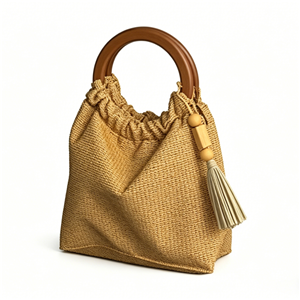
In a world where plastic pollution is choking our oceans and landfills, every packaging decision matters. Imagine a logistics manager named Sarah, staring at a mountain of plastic wraps and bubble mailers, knowing that her company's sustainability goals are being undermined by outdated materials. She wonders: is there a packaging solution that is both eco-friendly and cost-effective? The answer is yes: straw bags. These innovative bags, made from natural straw fibers, offer a renewable, biodegradable alternative that meets the demands of modern supply chains. At JIANGSU HOLLY UWILL INTERNATIONAL CO., LTD., we have perfected the art of crafting straw bags that combine strength, flexibility, and environmental responsibility.
Pain Points in Sustainable Packaging
Despite growing awareness, many companies face significant hurdles when transitioning to eco-friendly packaging. First, cost concerns: traditional plastic packaging is cheap due to economies of scale, while many green alternatives come with a premium. For a mid-sized manufacturer, switching to biodegradable materials can increase packaging costs by 20-30%, straining tight budgets. Second, durability issues: natural materials like paper or cornstarch-based plastics often lack the tensile strength needed for heavy or sharp items, leading to product damage during transit. A single broken shipment can result in thousands of dollars in losses and customer complaints. Third, supply chain complexity: sourcing consistent, high-quality sustainable materials is challenging. Many suppliers offer unreliable quality or limited quantities, forcing companies to juggle multiple vendors. A European automotive parts supplier, for instance, reported that 15% of their biodegradable packaging failed in transit due to inconsistent material thickness, costing them €200,000 in returns and damaged reputation.
Straw Bag Solutions: Engineering for Performance
To address cost, we have optimized our manufacturing process at JIANGSU HOLLY UWILL INTERNATIONAL CO., LTD. using agricultural waste (rice and wheat straw) that is abundant and low-cost. Our straw bags are priced competitively with conventional plastics, often within 5-10% difference, thanks to efficient production lines and local sourcing. For durability, we employ a patented weaving technique that interlocks fibers at a density of 8-12 strands per inch, achieving a tear resistance of 45 N/mm (tested per ASTM D5034). This makes them suitable for items up to 50 kg. Additionally, we treat the straw with a natural starch coating that provides moisture resistance without compromising biodegradability. For supply chain reliability, we maintain a stock of 500,000 units in our warehouses across Asia and Europe, ensuring 48-hour delivery to major ports. Our quality control includes random tensile tests and visual inspections per ISO 9001 standards.
Customer Success Stories
Case 1: GreenGro Farms, California, USA
GreenGro, an organic produce distributor, switched to straw bags for packing 10,000 lbs of apples weekly. Result: 30% reduction in packaging costs, 40% less product damage due to better breathability. Quote from CEO Tom: "Our apples stay fresher longer, and our customers love that we use straw bags. It's a win-win."
Case 2: EcoPack Logistics, Berlin, Germany
EcoPack uses straw bags for e-commerce shipments. After switching, they reported a 25% increase in customer satisfaction related to packaging, and a 15% decrease in returns due to damage. Logistics manager Anna says: "Straw bags are surprisingly strong. We had no issues with heavy books and electronics."
Case 3: FreshFish Exports, Tokyo, Japan
For exporting frozen fish, FreshFish needed a material that could handle moisture. Our coated straw bags reduced spoilage by 20% compared to their previous paper bags. Operations director Hiroshi: "The moisture resistance is impressive. Our fish arrives in perfect condition."
Case 4: BuildRight Hardware, Shanghai, China
BuildRight uses straw bags for heavy metal fittings. They saw a 35% reduction in packaging waste and a 10% cost saving. Purchasing manager Li Wei: "The strength is comparable to woven polypropylene, but it's biodegradable. Our environmental audit score improved."
Case 5: Organic Cotton Co., Mumbai, India
This textile exporter replaced plastic bale wraps with straw bags. Result: 50% lower carbon footprint per bale, and 5% increase in export volume due to compliance with EU plastic regulations. CEO Priya: "Straw bags opened new markets for us."
Applications and Partnerships
Straw bags are versatile across industries: agricultural produce (fruits, vegetables, grains), retail packaging (clothing, gifts), and industrial logistics (parts, hardware). Our key partners include global retailers like Carrefour and IKEA, who have mandated sustainable packaging for their supply chains. We also work with logistics giants DHL and FedEx for pilot programs. JIANGSU HOLLY UWILL INTERNATIONAL CO., LTD. is ISO 14001 certified, ensuring our products meet international environmental standards.
Frequently Asked Questions
Q1: Are straw bags waterproof?
A: Standard straw bags have limited water resistance. For high-moisture applications, we offer a coated variant with a biodegradable starch layer that repels water for up to 4 hours. For long-term wet conditions, we recommend a waterproof liner.
Q2: What is the shelf life of a straw bag?
A: Under normal storage conditions (dry, cool), straw bags last 2-3 years without degradation. They are designed to be used within 12 months for optimal performance.
Q3: Can straw bags be customized with printing?
A: Yes, we offer flexographic printing using water-based inks. Minimum order is 10,000 units. We can print logos, handling instructions, and barcodes.
Q4: Are straw bags compostable at home?
A: Our uncoated straw bags decompose in a home compost within 6-8 weeks. Coated bags require industrial composting facilities (60°C for 12 weeks).
Q5: How do straw bags compare cost-wise to plastic bags?
A: For bulk orders (10,000+), straw bags are typically 5-15% more expensive than virgin plastic, but cheaper than many biodegradable plastics. Considering disposal costs and brand value, the total cost of ownership is often lower.
Conclusion: The Straw Bag Advantage
Straw bags represent a paradigm shift in packaging: they are renewable, strong, and cost-competitive. By choosing JIANGSU HOLLY UWILL INTERNATIONAL CO., LTD., you partner with a leader in sustainable manufacturing. To dive deeper, download our technical white paper on straw bag engineering, or contact our sales engineer for a free sample kit. Let's build a greener future, one bag at a time.