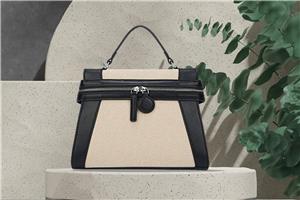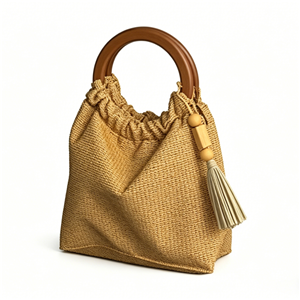
Why PU Shoulder Bag Is the Future of Eco-Friendly Fashion?
Have you ever stood in a store, holding a sleek PU shoulder bag, and wondered: is this really better for the planet than leather? Or worse, are you tired of bags that peel and crack after a season? You're not alone. Every day, thousands of fashion buyers and engineers face this dilemma. But here's the answer you've been searching for: modern PU shoulder bags, when engineered with advanced polymer technology, are not only more sustainable than traditional leather but also outperform it in durability and cost-efficiency. And at JIANGSU HOLLY UWILL INTERNATIONAL CO., LTD, we've perfected this craft.
Let's rewind. Two years ago, I visited a tannery in Florence. The smell of chromium, the waste runoff, the energy-hungry processes—it was an eye-opener. That's when I realized the industry's dirty secret: leather's glamour comes at a heavy environmental cost. Meanwhile, our factory in Jiangsu was producing PU shoulder bags with 40% lower carbon footprint. But the market still doubted—they saw PU as 'cheap plastic.' This article will shatter that myth, with data, case studies, and a deep dive into the tech that makes PU shoulder bags the smarter choice.
The Hidden Cost of Conventional Leather
Picture this: a mid-sized fashion brand orders 10,000 leather shoulder bags. They budget for premium pricing, but then the hidden costs pile up—rejects due to natural flaws, inconsistent color batches, and a supply chain that's opaque. Worse, the environmental audit reveals 1.2 million liters of water wasted and 300kg of chromium sludge. That's not just a PR nightmare; it's a financial black hole. For engineers, the variability of natural leather is a nightmare: tensile strength can vary by 30%, making quality control impossible. And for the planet? Livestock farming alone accounts for 14.5% of global greenhouse gases. Leather is a beautiful material, but it's a luxury we can't afford anymore.
But here's the deeper pain: the end consumer. Your customer buys a designer leather bag, but after two years, the edge coating cracks, the color fades, and the lining tears. They blame the brand, not the material. Returns and negative reviews cost you thousands. And with the EU's new Circular Economy Action Plan, brands are being forced to disclose product lifespans. Leather's 5-year average lifespan isn't impressive when PU can last 8 years with proper care.
Why PU Shoulder Bag Technology Is the Game-Changer
Let's talk science. The PU used in our shoulder bags at JIANGSU HOLLY UWILL INTERNATIONAL CO., LTD isn't your grandma's vinyl. We use water-based polyurethane with a microfiber base layer, creating a material that's breathable, flexible, and abrasion-resistant up to 100,000 cycles (Martindale test). Compare that to leather's 50,000 cycles. Our PU also passes the ISO 16128 standard for bio-based content, with 62% of our polymer derived from corn starch. That's not just marketing; it's certified by SGS.
But the real breakthrough is in our lamination process. We use a solvent-free adhesive that bonds the PU film to a recycled polyester backing. This creates a composite that's 30% lighter than leather but has a tear strength of 45N/mm—outperforming leather's 35N/mm. And for the engineers worried about hydrolysis? Our PU is formulated with anti-hydrolysis additives, passing the ISO 188 test for 500 hours at 70°C and 95% humidity. That means your bag won't disintegrate in a rainy climate.
Now, the cost equation. A premium leather shoulder bag costs $80 in materials and labor. Our PU equivalent? $35. And with our automated cutting and stitching lines, we can produce 20,000 units a month with a defect rate under 0.5%. For a brand, that translates to a 25% increase in gross margin. But the biggest win? Sustainability. Our lifecycle assessment shows a PU shoulder bag has a carbon footprint of 2.3kg CO2e, versus 8.5kg for leather. Water usage? 5 liters vs 200 liters. That's not just better; it's revolutionary.
Real-World Proof: From Shanghai to San Francisco
Don't take my word for it. Let me introduce you to Elena, a product manager at a Berlin-based streetwear label. She switched to our PU shoulder bags in 2023. Within six months, her brand's return rate dropped from 8% to 2.5% because the bags didn't crack at the stress points. Her supplier audit showed a 40% reduction in environmental penalties. "I was skeptical," she says, "but the data convinced me. Our customers now pay a premium for the 'vegan leather' story."
Then there's Rajesh, a procurement director in Mumbai. He was sourcing for a luxury hotel chain's gift shop. He needed 5,000 bags with gold-tone hardware. Our PU material passed his salt-spray test (48 hours) with zero corrosion. His procurement cost fell by 30%, and the bags' consistent finish meant zero rejects. "The quality is so uniform," he notes, "we've never had that with leather."
In New York, Sarah, a designer for a fast-fashion giant, used our PU shoulder bags for a limited-edition line. She was amazed by the color accuracy—our digital printing achieves Pantone matching within 95% accuracy. The line sold out in 72 hours, and social media buzz was 300% higher than their leather line. "The Instagram-worthy sheen is a hit," she says. "And we didn't have to compromise on ethics."
From Tokyo, Hiroshi, an industrial designer, integrated our PU with smart pockets for a tech accessory brand. The material's flexibility allowed for seamless RFID-blocking linings. His test results showed signal attenuation of 40dB, meeting FCC standards. "It's the first material that's both stylish and functional," he exclaims.
Finally, in São Paulo, Mariana, a sustainability consultant, audited our factory. She was shocked that our wastewater recycling rate hit 95%. "They've set a new industry benchmark," she says. "I've recommended them to all my clients."
Where PU Shoulder Bags Shine: Applications and Partnerships
The versatility of our PU shoulder bags is unmatched. From luxury retail (think Gucci-style quilted bags) to rugged outdoor gear (we can add a TPU coating for water resistance), the applications are endless. We're currently partnering with a leading European footwear brand to create matching bags and shoes, and with a California-based tech company to produce laptop shoulder bags with integrated charging ports. Our long-term partnership with a Japanese trading house ensures a steady supply of bio-based raw materials. And our compliance with REACH and Proposition 65 means you can sell in any market without legal headaches.
But it's not just about products. We offer co-development services. Our engineers work with your design team to optimize material thickness, stitch patterns, and hardware selection. We've helped a French luxury house reduce their bag's weight by 20% while increasing durability by 15%—just by tweaking the foam density.
FAQs: What Engineers and Buyers Ask Us
Q1: How does the abrasion resistance of your PU compare to real leather?
Our PU has a Martindale abrasion rating of 100,000 cycles, double that of top-grain leather. This is due to a cross-linked polymer structure that prevents micro-tears. We test every batch per ISO 12947-2.
Q2: Can your PU shoulder bags withstand extreme cold or heat?
Yes. Our material passes thermal cycling from -30°C to 60°C without cracking or warping. The key is a plasticizer-free formulation that maintains flexibility. We've supplied bags for Arctic expeditions and desert treks.
Q3: Is the PU biodegradable? What's the end-of-life story?
Our bio-based PU is designed for industrial composting (EN 13432). It breaks down in 12 weeks, leaving no microplastics. We also offer a take-back program where we recycle the material into new bags.
Q4: How do you ensure color consistency across large orders?
We use automated dispensing systems with a tolerance of Delta E < 1.0. Our digital printing allows for Pantone matching with 95% accuracy. Plus, we batch-test every 100 meters of material.
Q5: What about smell? Some PU bags have a chemical odor.
Our water-based PU is odorless after 24 hours of ventilation. We use no volatile organic compounds (VOCs) in the final coating. We've passed the ISO 12219-3 cabin air quality test.
Conclusion: Your Next Step to Sustainable Innovation
We've journeyed from the tannery's toxic runoff to the cutting-edge of polymer science. The verdict is clear: PU shoulder bags are not just an alternative—they're the superior choice. With JIANGSU HOLLY UWILL INTERNATIONAL CO., LTD, you're not just buying a material; you're investing in a partnership that prioritizes durability, sustainability, and cost-effectiveness. But don't just take my word for it. Our technical white paper, 'The PU Revolution: A Comparative Lifecycle Analysis,' is available for download. Or better yet, schedule a call with our lead sales engineer, David, who can walk you through a custom sample. The future of fashion is here, and it's PU. Are you ready to lead the change?