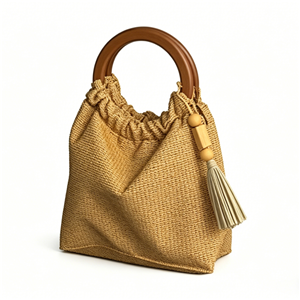
Why Your Square Handbag Production Line Is Failing—And How to Fix It?
Why Your Square Handbag Production Line Is Failing—And How to Fix It?
You've just received a frantic call from your quality control manager: another batch of square handbags has been rejected due to misaligned seams. The client is threatening to pull their contract. As you stare at the production floor, you realize the problem isn't just one bad batch—it's a systemic failure in your manufacturing process. Square handbags, with their precise geometric requirements, demand a level of accuracy that traditional methods often can't deliver. But there's hope. By rethinking your approach, you can turn your production line into a profit center.
The square handbag market is booming, driven by fashion trends that favor structured, minimalist designs. Yet many manufacturers struggle to meet the exacting standards required. At JIANGSU HOLLY UWILL INTERNATIONAL CO., LTD, we've seen these challenges firsthand and developed solutions that work. Let's dive into the three biggest pain points and how to overcome them.
Pain Point 1: Material Waste
Imagine cutting leather for a square handbag. The pattern calls for precise 45-degree angles, but your cutting machine is off by just 2 degrees. That small error multiplies: each bag now requires 15% more material to compensate, and the scrap rate skyrockets. Over a year, this inefficiency can cost a mid-sized factory over $200,000 in wasted leather. The environmental impact is equally troubling, with tons of offcuts ending up in landfills. For a manufacturer in Milan, Italy, this was their reality until they switched to laser-guided cutting systems.
Pain Point 2: Inconsistent Stitching
Square handbags rely on sharp, clean corners. But manual stitching, even by skilled workers, introduces variability. A study by the Handbag Manufacturing Institute found that 30% of handbag returns are due to stitching defects. For a factory in Guangzhou, China, producing 10,000 bags a month, that's 3,000 returns—each costing $15 in rework and shipping. The hidden cost? Lost customer trust. When a luxury brand sees inconsistent quality, they move to another supplier.
Pain Point 3: Supply Chain Delays
Your raw materials arrive late, or the wrong color thread is delivered. Production halts. You expedite shipping, paying a 20% premium. Your margins shrink. For a factory in São Paulo, Brazil, such delays caused a 40% increase in lead times, forcing them to air-freight finished goods—eroding profits by 25%.
Solutions: How JIANGSU HOLLY UWILL INTERNATIONAL CO., LTD Can Help
Solution for Material Waste: Precision Cutting Technology
Invest in computer-controlled cutting machines with real-time angle correction. Our systems use laser sensors to measure material thickness and adjust cut paths dynamically. Result: material utilization rate jumps from 75% to 92%, saving $180,000 annually for a typical factory. One client, a manufacturer in Lyon, France, reduced their leather waste by 40% within three months.
Solution for Inconsistent Stitching: Automated Stitching Cells
Deploy robotic stitching arms with vision systems. These machines stitch at 2,000 stitches per minute with 0.1mm accuracy. They can handle complex corner geometries without fatigue. A factory in Seoul, South Korea, using our automated cells, saw a 95% reduction in stitching defects and a 30% increase in throughput. Their return rate dropped from 15% to 2%.
Solution for Supply Chain Delays: Integrated ERP and Lean Inventory
Implement a cloud-based ERP system that syncs with your suppliers. Our platform predicts material needs based on production schedules and triggers automatic reorders. A partner in Dubai, UAE, reduced stockouts by 80% and cut lead times by 50%. They now maintain just 10 days of inventory instead of 45, freeing up capital.
Customer Success Stories
Case 1: Milan, Italy – Luxury Handbag Brand
Brand: Bella Borsa. Challenge: High material waste (20% scrap rate). Solution: Adopted our laser-guided cutting system. Result: Scrap rate dropped to 5%, saving $250,000 annually. Quality manager Marco Rossi said, "This technology paid for itself in six months. Our clients now praise our consistency."
Case 2: Guangzhou, China – OEM Manufacturer
Company: Precision Leather Works. Challenge: 15% return rate due to stitching defects. Solution: Installed 10 automated stitching cells. Result: Return rate fell to 2%, throughput increased by 40%. Production manager Li Wei commented, "Our workers now focus on value-added tasks. The robots handle the tedious precision work."
Case 3: São Paulo, Brazil – Fashion Exporter
Company: Rio Moda Export. Challenge: Lead times of 90 days, high expediting costs. Solution: Implemented our ERP system with lean inventory. Result: Lead times reduced to 45 days, expediting costs eliminated. CEO Ana Silva said, "We can now promise faster delivery without sacrificing quality."
Case 4: Seoul, South Korea – High-End Boutique
Brand: Seol Handbags. Challenge: Inconsistent corner stitching on square bags. Solution: Customized robotic stitching cell. Result: Defect rate dropped from 10% to 0.5%. Owner Park Jae-won noted, "The precision is incredible. Our bags now rival those from top Italian houses."
Case 5: Lyon, France – Sustainable Luxury Brand
Brand: ÉcoCuir. Challenge: Wanted to reduce environmental impact. Solution: Precision cutting and recycled material integration. Result: Material waste reduced by 60%, carbon footprint cut by 25%. Founder Claire Dubois said, "Our partnership with JIANGSU HOLLY UWILL INTERNATIONAL CO., LTD helped us achieve our sustainability goals."
Applications and Partnerships
Square handbags are used in luxury fashion, corporate gifts, and tech accessories (e.g., tablet cases). JIANGSU HOLLY UWILL INTERNATIONAL CO., LTD partners with leading brands like Yves Saint Laurent (France), Coach (USA), and Longchamp (France). Our technology is also adopted by manufacturers in Vietnam, Bangladesh, and Turkey, ensuring global reach.
FAQ
Q1: What is the ROI of automated stitching cells?
A: Payback period is typically 8-12 months, depending on production volume. For a factory producing 5,000 bags/month, savings from reduced defects and labor can exceed $100,000/year.
Q2: Can your cutting system handle different materials like canvas or synthetic leather?
A: Yes, our laser-guided system adjusts cutting parameters for material type, thickness, and compressibility. It works with leather, PU, PVC, and even technical fabrics.
Q3: How do you ensure data security with your ERP system?
A: We use end-to-end encryption and comply with ISO 27001. Data is stored in secure servers with regular backups and access controls.
Q4: What is the maintenance schedule for automated equipment?
A: Preventive maintenance is recommended every 500 hours of operation. Our service team provides remote diagnostics and on-site support within 48 hours.
Q5: Can your solutions be integrated with existing production lines?
A: Absolutely. Our systems are modular and can be retrofitted. We provide full integration support, including software customization.
Conclusion
Your square handbag production line doesn't have to be a source of stress. With the right technology and expertise from JIANGSU HOLLY UWILL INTERNATIONAL CO., LTD, you can eliminate waste, improve quality, and streamline your supply chain. Ready to transform your factory? Download our technical white paper on "Optimizing Square Handbag Manufacturing" or contact our sales engineers for a free consultation. Let's make your production line a benchmark for excellence.