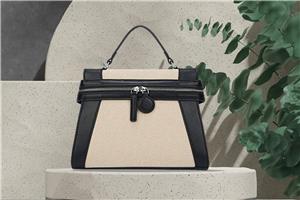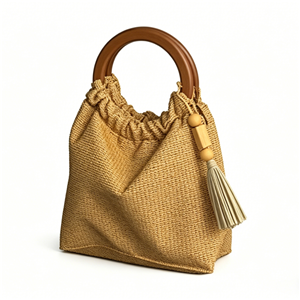
What Is a Raffia Bag?
A raffia bag is a handwoven or hand-crocheted accessory made from natural fibers harvested from the leaves of the raffia palm tree. Lightweight, breathable, fully biodegradable, and prized for its tactile, ribbon-like texture, the raffia bag has evolved from a humble craft item into one of the most sought-after categories in sustainable fashion — and one of the fastest-growing wholesale opportunities for brands, retailers, and private-label businesses building their 2026 product lines.
If you're a brand manager evaluating a new accessory category, a buyer looking for a reliable raffia bag manufacturer, or a retailer scoping out wholesale raffia bags to expand your assortment, this guide gives you everything you need: a complete breakdown of what raffia is, how raffia bags are made, the styles dominating the market in 2026, how to verify sustainability claims, what to look for in a raffia bag supplier, and how to source intelligently from origin to shelf. We've also included a buyer's checklist, care recommendations, comparison tables, and a full FAQ section to help both consumers and B2B decision-makers make confident choices.
By the end, you'll understand not just what a raffia bag is — but why it has become the defining accessory of conscious fashion in 2026, and how to source the right way.
What Is a Raffia Bag? Definition & Core Characteristics
A raffia bag is a fashion or lifestyle accessory crafted from natural raffia palm fibers — long, ribbon-like strands that are dried, sometimes dyed, and then either hand-crocheted or hand-woven into the finished bag shape. Unlike synthetic woven bags or generic "straw" bags, an authentic natural raffia bag is made from 100% plant-derived fiber with no plastic content, no microplastic shedding, and a fully biodegradable end-of-life profile.
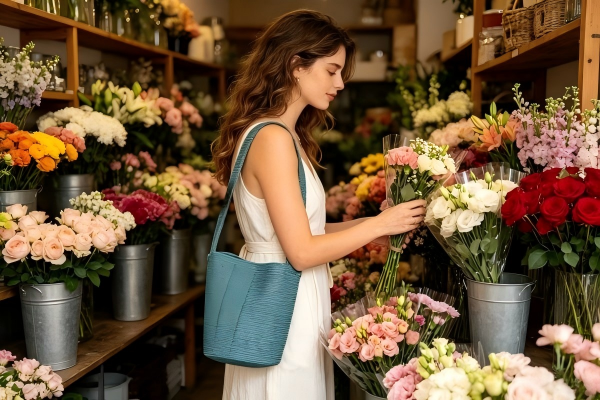
The defining characteristics of a quality raffia bag include:
Material purity — Genuine raffia bags are made from natural raffia palm fiber, not synthetic "raffia-effect" yarn or reconstituted wood-and-cotton blends.
Hand craftsmanship — Most premium handmade raffia bags are crocheted or woven by skilled artisans, with each piece carrying small natural variations that distinguish them from machine-made products.
Distinctive texture — Raffia has a soft, slightly silky, ribbon-like feel that is noticeably more refined than rigid straw or paper-yarn alternatives.
Lightweight and breathable — Even a structured raffia tote is dramatically lighter than a leather equivalent of the same size.
Natural neutrality — In its undyed form, raffia carries warm beige, sand, and honey tones; it also accepts dye exceptionally well, allowing for vibrant color customization without compromising fiber integrity.
For B2B buyers, these characteristics also define the quality benchmarks that should appear in every supplier specification sheet. If a raffia bag manufacturer cannot clearly document fiber origin, weave density, and dye method, the product is unlikely to meet the standards your retail partners — or end customers — expect.
It's also important to distinguish a true raffia bag from products that share the visual category but use different raw materials. Straw bags use dried cereal stalks or paper yarn. Jute bags use coarse vegetable fiber. Rattan and seagrass bags use rigid plant materials suited to structured shapes. A raffia bag stands apart because of the fiber's unique combination of softness, strength, and design flexibility — properties no substitute material fully replicates.
Where Does Raffia Come From? The Story Behind the Fiber
Every authentic raffia bag begins as a leaf on a palm tree. Understanding the journey from palm to product is not just an interesting backstory — for B2B buyers, it's the foundation of quality assessment, sustainability verification, and supply chain due diligence.
The Raffia Palm: Botanical Origin
Raffia fiber is harvested from the Raphia farinifera — commonly known as the raffia palm — a tropical tree species native to humid lowland regions of Madagascar, central and eastern Africa, and parts of Southeast Asia and Central America. The raffia palm is remarkable in several ways: it produces some of the longest leaves of any plant in the world, with mature fronds reaching up to 25 meters in length, and each frond yields thin, ribbon-like fiber strands that have been used by local communities for centuries.
Among the various global sources, Madagascar raffia is widely regarded as the gold standard. The island's combination of warm coastal climate, mineral-rich soil, and traditional harvest knowledge produces fiber that is longer, more consistently sized, and more resilient than raffia grown in other regions. When a high-end fashion house references "Madagascan raffia" on a hangtag, it isn't marketing language — it's a quality signal recognized throughout the global supply chain.
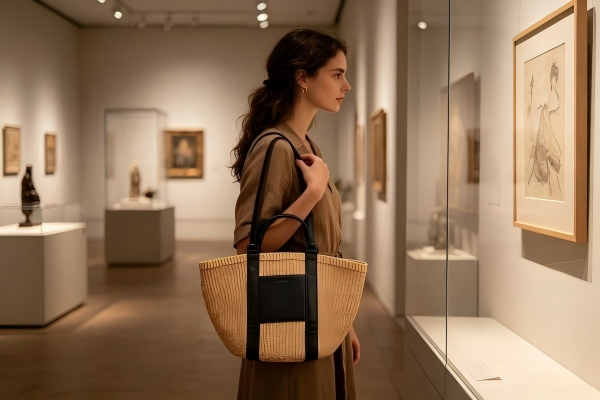
How Raffia Is Harvested
The harvesting process is where sustainability is either preserved or destroyed. Responsible raffia harvesting follows several principles that have been refined over generations:
Young shoot selection — Harvesters select only young, immature leaves before they unfurl fully. Mature leaves are tougher, less flexible, and produce inferior fiber.
The 30% rule — Best-practice harvesting takes no more than 30% of a tree's young shoots in any given cycle, allowing the palm to recover and continue producing for decades. Aggressive over-harvesting damages the tree and disrupts the local ecosystem.
Hand cutting — Leaves are cut by hand using small blades, with no mechanized clear-cutting. This protects surrounding vegetation and supports local employment.
Seasonal harvesting — In Madagascar, harvest cycles are aligned with the dry season (typically May through October) to ensure optimal fiber drying conditions and minimize fungal damage.
After cutting, the leaves are split lengthwise to remove the central rib, then peeled into thin ribbon strands. These strands are sun-dried for several days until they reach the right moisture level — too wet and they will mildew in storage, too dry and they will become brittle and crack during weaving.
Grading and Sorting: Why Quality Tiers Matter
Once dried, raffia fiber is sorted into quality grades based on length, width consistency, color uniformity, and tensile strength. While grading systems vary by region and exporter, most operate on a three-tier framework:
| Grade | Characteristics | Typical Use |
|---|---|---|
| Grade A | Long strands (50cm+), uniform width, soft texture, even color | Luxury bags, premium hats, designer accessories |
| Grade B | Medium length, minor color variation, good flexibility | Mid-market bags, home decor, gifting |
| Grade C | Shorter strands, less uniform, often used in blends | Crafts, packaging, garden ties, low-cost products |
For B2B buyers, understanding fiber grading is essential. A supplier offering bags at a price that seems unusually low is almost certainly using Grade B or C fiber, blended fiber, or reconstituted raffia (wood and cotton fiber processed to mimic the look of natural raffia). The resulting products may pass a casual inspection but will fail in durability, retain less color, and degrade more quickly under regular use.
Natural vs. Reconstituted vs. Synthetic Raffia
This is one of the most important distinctions for any sourcing team to understand. Three very different materials all circulate under the "raffia" label:
Natural raffia — 100% plant-derived fiber from the raffia palm. The only material that delivers the full set of authentic raffia properties: softness, flexibility, biodegradability, and the natural resin content that gives raffia its longevity.
Reconstituted raffia — A processed material made from wood pulp and cotton fiber, engineered to resemble natural raffia visually. More uniform in size, easier to dye, but lacks the tactile quality and durability of the real fiber.
Synthetic raffia — Plastic-based (typically polypropylene) ribbon used in industrial packaging, agricultural ties, and the lowest tier of fast-fashion accessories. Should not be marketed as a sustainable product under any circumstances.
For brands positioning in the premium, sustainable, or luxury segment, only natural raffia delivers on the implicit promise the category makes to consumers. When you specify your sourcing requirements, the phrase "100% natural Madagascan raffia, Grade A" should appear explicitly — not as a marketing aspiration, but as a contractual specification.
How Is a Raffia Bag Made? From Fiber to Finished Accessory
Behind every quality raffia bag is a labor-intensive production process that can take anywhere from 8 to 20 hours of skilled artisan work per unit, depending on the complexity of the design. For buyers evaluating a raffia bag manufacturer, understanding the full production sequence is essential — both to assess pricing realistically and to identify which suppliers can actually deliver the quality their product line requires.
The 5-Stage Production Process
Most reputable raffia bag factory operations follow a five-stage workflow. While individual factories may add specialized steps for custom orders, this sequence represents the industry standard for handmade raffia accessories.
Stage 1 — Fiber Preparation
Dried raffia strands arrive at the factory in bundled form. Before any production begins, workers sort the fiber a second time, removing strands with surface defects, irregular width, or color inconsistencies. The selected fiber is then conditioned — usually with controlled humidity exposure — to restore flexibility for weaving. Skipping or rushing this stage is one of the most common causes of quality failure in low-cost production.
Stage 2 — Dyeing (Optional)
If the design requires colored raffia, dyeing happens before weaving begins. Quality factories use Oeko-Tex certified, azo-free dye processes that meet European and US import standards. Cheaper operations may use uncertified industrial dyes that fade quickly, transfer color onto clothing, or violate REACH regulations — creating real compliance risk for brand buyers. Natural raffia accepts dye exceptionally well, allowing for vivid color matching while preserving fiber softness.
Stage 3 — Hand Crocheting or Weaving
This is the heart of the production process and where craftsmanship determines the final value of the product. There are three primary techniques used to construct a handmade raffia bag:
| Technique | Description | Best Suited For | Skill Level |
|---|---|---|---|
| Crochet | Single-strand interlocking loops formed with a hook | Soft, flexible bags with intricate patterns; the foundation of any raffia crochet bag | High — 6–18 months training |
| Weave | Strands interlaced in warp-and-weft patterns | Structured totes, baskets, market bags | Medium — 3–6 months training |
| Braid | Multiple strands plaited into rope-like cords | Handles, trims, decorative borders | Medium — varies by complexity |
A skilled crochet artisan can produce roughly 2–4 mid-sized bags per week. This artisan time is the single largest cost component in a finished raffia bag, which is why honest pricing from any raffia bag supplier will reflect the labor reality rather than the spreadsheet fantasy of mass production.
Stage 4 — Shaping, Assembly, and Hardware
Once the body of the bag is complete, it moves to the assembly station. This is where leather trims, lining fabrics, zippers, magnetic closures, metal hardware, handles, and brand labels are added. For brands placing custom raffia bag manufacturer orders, this stage is where most design customization is implemented. A capable factory will offer hardware in multiple finishes (gold, silver, gunmetal, antique brass), lining in cotton or recycled polyester, and the option to apply embossed leather patches, woven labels, or metal logo plates.
Stage 5 — Quality Control and Finishing
The final stage is multi-point inspection. At HandBraid, every unit passes through checks for weave density, stitching integrity, dye fastness, hardware function, and dimensional accuracy. Bags failing any criterion are pulled from the batch. Industry-leading factories target a quality rejection rate below 1.5%, with full documentation of each batch for traceability and reorder consistency.
What Separates a Premium Factory from a Generic Workshop
For buyers comparing potential partners, the production process reveals far more than a price sheet ever will. A few markers consistently distinguish a serious OEM raffia bag factory from a marginal operation:
In-house artisan training programs — Skilled crochet artisans are not interchangeable labor. Factories that invest in training their own workforce produce more consistent quality than those that rely on day labor or seasonal subcontractors.
Dedicated sampling teams — A factory that can deliver a refined sample in 3–7 days is a factory with senior pattern-makers on staff. Long sample lead times often signal that designs are being outsourced.
Vertical material control — Top-tier manufacturers source raffia directly or through long-term partnerships with origin cooperatives, rather than buying through trading companies. This is what enables reliable Grade A fiber supply at stable pricing.
Documented certifications — BSCI, Sedex, FSC, GRS, ISO 9001. These aren't decorative logos — they're the audit trail that protects your brand if a retail compliance team or end consumer questions your supply chain.
Transparent MOQ flexibility — A capable factory can scale from a 300-piece pilot run to a 50,000-piece seasonal order without compromising consistency. Operations that can only run high-volume orders, or only one-off samples, will not be reliable long-term partners.
Why Production Process Matters to Your Bottom Line
The five-stage process described above directly translates to commercial outcomes. Quality at Stage 1 (fiber selection) determines product lifespan. Quality at Stage 2 (dyeing) determines compliance and color longevity. Quality at Stage 3 (hand craftsmanship) determines retail price ceiling. Quality at Stage 4 (assembly) determines perceived value at first touch. Quality at Stage 5 (inspection) determines return rate.
A raffia bag manufacturer that compromises at any single stage transfers that compromise directly onto your brand. Buyers who understand the process can ask the right questions during factory evaluation — and that knowledge alone often pays for itself many times over across a single seasonal order.
Types of Raffia Bags: A Complete Style Guide
The raffia bag category is far broader than most people realize. What began as a simple summer market tote has evolved into a full accessories ecosystem, with distinct silhouettes serving different occasions, customer segments, and retail price points. For brands building a coherent product range — or shoppers deciding which style suits their wardrobe — understanding the major raffia bag types is the starting point.
Below is the complete style breakdown, with the use case, design notes, and retail positioning of each major silhouette.
The Major Raffia Bag Styles
| Style | Description | Best For | Retail Price Range | Production Complexity |
|---|---|---|---|---|
| Raffia Tote Bag | Large, open-top, two-handle silhouette with rectangular or trapezoidal body | Beach, market, travel, everyday carry | $40–$300 | Low–Medium |
| Raffia Crochet Bag | Hand-crocheted with intricate stitch patterns; soft, flexible structure | Resort wear, brunch, day-to-evening transition | $60–$500+ | High |
| Raffia Bucket Bag | Cylindrical body with drawstring or magnetic closure | City commute, casual outings | $80–$400 | Medium |
| Raffia Shoulder Bag | Compact body with chain or leather strap | Day-to-evening versatility | $90–$600+ | Medium–High |
| Raffia Clutch | Flat, handheld envelope or pouch silhouette | Weddings, evening events, dinners | $50–$350 | Medium |
| Raffia Basket Bag | Structured, rigid body holding a defined shape | Vacation, picnic, garden party | $70–$280 | Medium |
| Raffia Cross-body Bag | Small to mid-sized with adjustable strap | Festivals, travel, hands-free everyday wear | $80–$400 | Medium |
| Raffia Backpack | Two-strap silhouette in raffia (often with leather trim) | Travel, casual, younger demographics | $120–$500 | High |
| Raffia Mini Bag | Pocket-sized novelty silhouette | Trend-driven gifting, fashion statement | $40–$250 | Medium |
Style-by-Style Breakdown
Raffia Tote Bag
The most established silhouette in the category, and the highest-volume seller for most retailers. A raffia tote bag is defined by its open top, two parallel handles, and roomy interior — built to carry beach essentials, market produce, or laptop-and-lunch for the office. Within this category, sub-variants include the French Market Tote (slouchy, unstructured), the Beach Tote (oversized, lined), and the Structured Day Tote (rigid frame, leather-trimmed). For wholesale buyers entering the category, the tote is typically the safest first SKU.
Raffia Crochet Bag
A raffia crochet bag is built strand-by-strand using crochet techniques rather than woven panels. The result is a softer, more pliable bag with visually intricate stitch patterns — open lacework, dense closed weaves, or 3D textured surfaces. This category includes the silhouettes that have dominated luxury runways: think Prada Crochet Tote, JW Anderson scallop-edge totes, and the hand-crocheted styles that defined the 2024–2026 raffia wave. Crochet construction commands a higher retail price ceiling because of the artisan labor involved — typically 12–20 hours per unit for a complex pattern.
Raffia Bucket Bag
The bucket silhouette is having a sustained moment in the 2026 market. With its cylindrical body, drawstring or top-knot closure, and rounded base, the raffia bucket bag bridges the gap between casual and refined. It works for daytime errands but also pairs well with linen blazers and tailored separates, giving it broader wardrobe versatility than a traditional tote. Bucket bags are particularly popular in the contemporary lifestyle segment ($80–$200 retail).
Raffia Shoulder Bag
Often the entry point for consumers who want a single raffia piece that works across multiple occasions. A well-designed raffia shoulder bag, typically finished with a leather or chain strap, can carry a wearer from a daytime lunch to an evening dinner without feeling out of place in either setting. This style has been adopted heavily by luxury houses including Chanel, Fendi, and Gucci, which has elevated the silhouette's perceived value across the broader market.
Raffia Clutch
The clutch is where raffia meets formalwear. Smaller in scale and often embellished with embroidery, beadwork, or contrasting leather trim, the raffia clutch has become a fixture at warm-weather weddings, summer gallery openings, and resort dinners. Because of its smaller surface area, the clutch is often the canvas for the most elaborate craftsmanship a factory can produce — making it a profitable category for brands willing to invest in detail.
Raffia Basket Bag
Structured, rigid, and unapologetically vacation-coded. The basket bag silhouette draws on Mediterranean and North African design heritage, with stiffer weaves that hold their shape under load. It performs especially well in resort retail, hotel boutiques, and the summer hero piece for lifestyle brands.
Raffia Cross-body Bag
Compact, hands-free, and increasingly popular with younger demographics. The cross-body is a relatively recent addition to the raffia category, and its growth reflects broader market preferences for utility-driven design. Often combined with leather straps and metal hardware to offset the casual feel of the raffia body.
Raffia Backpack
A niche but fast-growing silhouette. The raffia backpack appeals to consumers who want sustainable accessories that still suit active, urban lifestyles. Production complexity is higher because the backpack form requires rigid structure, multiple straps, internal compartments, and reinforced stress points — making it a style that separates capable manufacturers from less-equipped suppliers.
Raffia Mini Bag
The mini bag is a trend-driven category, designed more for visual statement than capacity. Despite the limited functionality, mini bags often deliver strong margin and are popular gifting items. Production cost is lower per unit, but design complexity remains high because the small canvas leaves no room for execution flaws.
Choosing the Right Mix for Your Product Line
For brands new to the raffia category, the most common strategic mistake is launching with too many silhouettes at once. A more effective approach is to anchor the line around 2–3 core styles — typically a tote, a crochet shoulder bag, and a clutch or bucket — and expand based on early sell-through data.
The chart below shows a typical seasonal range structure that has worked across multiple HandBraid client launches:
| Silhouette | Share of Range | Role |
|---|---|---|
| Raffia Tote | 30–40% | Volume driver, entry-price |
| Raffia Crochet Bag | 20–25% | Margin driver, story piece |
| Raffia Shoulder or Bucket | 15–20% | Wardrobe versatility, repeat purchase |
| Raffia Clutch | 10–15% | Occasion piece, gifting |
| Mini / Cross-body | 5–10% | Trend amplifier, social media driver |
This kind of structured range planning is one of the operational advantages of working with an experienced manufacturer — designs are not just produced, but commercially curated based on what actually sells across global accounts.
Why Are Raffia Bags Trending in 2026?
Raffia bags have moved decisively from seasonal accessory to year-round wardrobe staple. The data, the runway, and the street all point in the same direction: 2026 is shaping up to be the strongest year yet for the raffia category, and the momentum is being driven by a convergence of forces that show no signs of slowing.
For brand buyers and merchandising teams, understanding why the trend is happening is more important than confirming that it's happening. Trends with deep structural drivers — sustainability commitments, generational value shifts, luxury brand endorsement — last for years. Trends driven only by a single celebrity moment burn out in a season. Raffia is firmly in the first category.
Driver #1 — Luxury Houses Have Anchored the Category
The most decisive shift over the past three seasons has been the embrace of raffia by the most influential luxury fashion houses. Prada's hand-crocheted raffia totes, Loewe's woven anagram baskets, Chanel's quilted raffia flap bags, Fendi's raffia Baguette and Peekaboo, Gucci's Jackie 1961 in raffia and leather, Christian Dior's raffia novelty bags, Bottega Veneta's curly-effect raffia clutches, Versace's La Medusa raffia tote — these are not one-off experiments. They represent a sustained category investment by houses that command the global fashion conversation.
When luxury anchors a material, three downstream effects follow predictably:
Perceived value rises across the entire category — Mass-market raffia bags benefit from a halo effect that elevates retail price ceilings even at lower tiers.
Mid-market brands accelerate adoption — Contemporary lifestyle labels see safer ROI on raffia investment because consumer demand is already validated.
Vintage and resale markets activate — Platforms like 1stDibs and Vestiaire Collective now feature dedicated raffia bag categories, signaling collectible status.
Driver #2 — The Sustainability Mandate Has Become Non-Negotiable
The second structural driver is the maturation of consumer expectations around material transparency. In 2026, sustainability is no longer a marketing differentiator — it is a baseline requirement for any new product launch in the accessories category.
Recent industry data shows that more than 60% of Gen Z and Millennial consumers in Western markets now factor material sourcing and end-of-life biodegradability into accessory purchase decisions. Raffia bags answer this expectation natively: the material is renewable, biodegradable, requires no irrigation or pesticide use, and generates zero microplastic shedding throughout its lifespan.
This is why retail chains, department stores, and contemporary brands are actively expanding their natural-fiber accessory ranges and tightening their supplier compliance requirements in parallel. A raffia bag that arrives with verified certification documentation (FSC, BSCI, Sedex, GRS) clears compliance hurdles that synthetic alternatives increasingly fail.
Driver #3 — The "Quiet Luxury" and "Coastal Grandma" Aesthetic Wave
The third driver is aesthetic rather than ethical. Two of the dominant style narratives of the mid-2020s — Quiet Luxury and Coastal Grandma — both lean heavily on natural, tactile materials in neutral tonal palettes. Raffia sits precisely at the center of this aesthetic intersection: warm earthy tones, visible craftsmanship, tactile texture, no logo-driven branding.
The look that has emerged is unmistakable: a crochet raffia tote paired with linen separates, a structured raffia bucket bag worn with tailored cotton, a raffia clutch finishing an ivory wedding-guest outfit. These pairings have moved from Pinterest mood boards to mainstream wardrobe expectations across multiple Western markets.
Driver #4 — Year-Round Wearability Has Replaced "Summer Only"
For decades, raffia was categorized as a strictly seasonal material — relevant from May to August, irrelevant the rest of the year. That assumption has collapsed.
Designers and stylists have systematically demonstrated that raffia works year-round when paired thoughtfully: with rich knits and tailored coats in autumn, with velvet and dark separates in winter, with pastels in spring. For brands, this matters enormously. A year-round category supports continuous reorders rather than a single seasonal push, transforming raffia from a high-risk seasonal SKU into a stable assortment anchor.
Driver #5 — Social Media Has Built a Visual Vocabulary
The final driver is platform-native. Raffia bags photograph exceptionally well — the texture creates depth, the natural tones flatter most backgrounds, and the artisanal feel translates into the kind of "tactile content" that performs strongly on Instagram, TikTok, and Pinterest. Independent stylists, micro-influencers, and editorial accounts have built a vast visual library around raffia bags that continually feeds new consumer interest into the category.
What This Means for Brand Buyers
For anyone evaluating whether to enter or expand within the raffia category, the trend signals point to a multi-year window of opportunity rather than a short fashion cycle. The combination of luxury anchoring, sustainability mandate, dominant aesthetic alignment, year-round wearability, and social media amplification creates conditions that historically sustain category growth for five to ten years before plateauing.
The brands that move now — securing supplier relationships, locking in production capacity for peak season, building authentic sustainability narratives backed by certified sourcing — are the brands that will own meaningful market share when the category matures.
Are Raffia Bags Sustainable? The Eco-Friendly Truth
Sustainability claims in the accessories market have multiplied faster than the audit infrastructure that should validate them. For brand buyers, retail compliance teams, and end consumers all paying closer attention to material provenance, the honest answer to "are raffia bags sustainable" needs to be more specific than the marketing department typically allows.
The short answer: yes, a properly sourced natural raffia bag is among the most sustainable accessory choices available today — but the qualifying phrase "properly sourced" carries enormous weight. The difference between a genuinely sustainable raffia bag and a greenwashed one comes down to verifiable certifications, traceable supply chains, and the production standards of the raffia bag manufacturer behind the product.
The Six Pillars of Raffia Sustainability
A complete sustainability assessment of any raffia bag should cover six dimensions. Each pillar contributes independently to the overall environmental and social footprint of the product.
1. Renewable Raw Material
The raffia palm is a renewable tropical species that regenerates continuously when harvested correctly. Following the 30% young-shoot rule, a single palm tree can produce harvestable fiber for decades without replanting, irrigation infrastructure, or chemical inputs. This positions raffia at the high end of the renewability spectrum — comparable to bamboo and well above conventional cotton, which requires roughly 2,700 liters of water to produce a single t-shirt's worth of fiber.
2. Biodegradability
At end of life, a 100% natural raffia bag decomposes fully under standard composting conditions in approximately 12–18 months. There is no microplastic shedding during use, no microplastic residue at disposal, and no synthetic chemical leaching into surrounding soil. By comparison, a polyester tote with synthetic linings can persist for 200+ years in landfill conditions.
3. Low-Impact Processing
Raffia fiber preparation requires no industrial machinery, no synthetic chemicals, and minimal energy input. The fiber is cut by hand, sun-dried, sorted manually, and woven without mechanized equipment. Total carbon footprint per unit is a fraction of conventional leather or synthetic alternatives — particularly compelling when verified through the supply chain transparency that a certified sustainable raffia bag supplier can document.
4. Soil and Ecosystem Health
The raffia palm functions as a soil-stabilizing species in its native Madagascar habitat, helping to prevent erosion in coastal lowland regions. Responsible raffia harvesting therefore supports the broader ecosystem rather than depleting it — a rare property among commercial natural fibers.
5. Social Sustainability
The raffia supply chain is labor-intensive in a way that supports rural employment in some of the world's poorest regions. A single mid-sized handmade raffia bag represents 8–20 hours of artisan income, with that income flowing back into local communities rather than to industrial automation. Factories operating under BSCI, Sedex, or SA8000 standards extend this benefit through certified working conditions, fair wages, and verified hour-tracking.
6. Cradle-to-Cradle Profile
A natural raffia bag enters the world from a renewable source, sustains rural artisan livelihoods during production, lasts years in use, and returns to the earth as compost at end of life. Few materials in the fashion accessories category can claim a comparable lifecycle.
Material Comparison: Raffia vs. Other Common Bag Materials
For buyers building category positioning around sustainability, the comparative picture matters as much as the standalone profile. The table below shows how raffia performs against the most common alternatives across the dimensions that retail buyers and ESG reporting frameworks actually measure.
| Material | Renewable | Biodegradable | Water Use | Microplastic Risk | Typical Lifespan | Carbon Footprint |
|---|---|---|---|---|---|---|
| Natural Raffia | ✅ High | ✅ Full (12–18 months) | Very Low | None | 3–5+ years | Very Low |
| Conventional Leather | ⚠️ Animal-derived | Partial | Very High | None | 5–10+ years | Very High |
| Vegan PU Leather | ❌ Petroleum-based | ❌ No | Medium | High | 1–3 years | High |
| Cotton Canvas | ✅ Yes | ✅ Yes | Very High | None | 3–5 years | Medium |
| Polyester / Nylon | ❌ No | ❌ No (200+ years) | Medium | Very High | 2–4 years | High |
| Paper Straw | ✅ High | ✅ Yes (if uncoated) | Low | None | 1–2 years | Low |
| Jute | ✅ High | ✅ Yes | Medium | None | 2–4 years | Low |
The data is unambiguous: when measured across the full set of sustainability criteria that ESG reporting frameworks require, natural raffia outperforms nearly every alternative in the accessories category.
Why Certifications Matter More Than Marketing Claims
For B2B buyers in particular, "eco-friendly" claims on a product page mean nothing without third-party verification behind them. The certification ecosystem that protects against greenwashing in raffia sourcing centers on the following standards:
FSC (Forest Stewardship Council) — Verifies that fiber-bearing plant material is sourced from responsibly managed ecosystems. FSC certified raffia bags carry traceable documentation from origin to finished product.
GRS (Global Recycled Standard) — Relevant when raffia is blended with recycled materials such as recycled polyester linings or recycled cotton trims. GRS verifies the recycled content percentage and the chain of custody.
BSCI (Business Social Compliance Initiative) — Audits factory working conditions, fair wages, working hours, and worker safety. Required by most major European retail chains.
Sedex / SMETA — Provides ethical trade audits covering labor standards, health and safety, environment, and business ethics. The audit framework most widely accepted across UK and EU retailers.
ISO 9001 — Quality management system certification. Not a sustainability standard per se, but signals operational discipline that correlates strongly with sustainability execution.
Oeko-Tex Standard 100 — Verifies textile and dye safety, confirming that the finished product is free from harmful substances. Essential for any colored raffia bag entering the EU or US markets.
REACH Compliance — Mandatory for any product entering the European market. Confirms that all chemical substances used in production fall within EU safety limits.
A serious raffia bag manufacturer will hold a portfolio of these certifications and provide audit documentation on request. If a supplier cannot produce current, valid certificates within 48 hours of a buyer request, that absence is itself an answer.
HandBraid currently holds BSCI, FSC, Sedex, ISO 9001, RoHS, CE, SGS, and GRS certifications, allowing client brands to enter major retail channels — including European department stores, North American big-box retailers, and certified-sustainable D2C platforms — without supply-chain audit delays.
Translating Sustainability Into Brand Equity
For B2B buyers, the practical question is how sustainability credentials convert into commercial outcomes. The conversion paths are clear:
Faster retail onboarding — Pre-certified suppliers reduce buyer compliance review time by 3–6 months on average.
Higher retail price ceilings — Certified-sustainable products command 15–35% price premiums versus uncertified equivalents in the same category.
Lower return rates — Customers who purchase based on sustainability values return product at significantly lower rates than impulse purchasers.
Brand resilience — Verified supply chains protect brands against the reputational damage that follows when sustainability claims are exposed as unsupported.
Sustainable sourcing in the raffia category is no longer a "nice to have" — it is a structural advantage for brands building toward long-term retail relationships and consumer trust.
How to Style a Raffia Bag: 5 Looks for Every Occasion
One of the qualities that has made raffia bags so commercially durable is their styling versatility. A well-designed raffia handbag works across far more occasions than its summer-accessory reputation suggests. Below are five wardrobe scenarios that consistently perform — for the consumer building a personal wardrobe, and equally for the brand looking for editorial styling references when shooting a new product range.
Look 1 — Beach to Brunch
The original raffia bag use case, and still the highest-volume styling scenario. A large raffia tote in natural beige paired with a white linen sundress, leather flat sandals, and oversized sunglasses creates the effortless coastal look that defines warm-weather dressing. The same tote transitions into brunch when the dress is swapped for high-waisted linen trousers and a knit tank top.
Why it works: the natural raffia tones act as a neutral base, allowing colorful accessories — silk scarves, gold jewelry, statement sunglasses — to anchor the outfit without competing with the bag.
Look 2 — City Commute
The contemporary repositioning of raffia. A structured raffia bucket bag or mid-sized raffia shoulder bag with leather trim and metal hardware pairs cleanly with tailored trousers, a cotton button-down, and loafers or low heels. The natural texture introduces visual warmth into otherwise neutral professional dressing, softening the formality without undermining it.
Why it works: structured silhouettes and leather hardware give raffia the architectural discipline that office dressing requires, while the material itself signals a more relaxed, contemporary sensibility than conventional leather alternatives.
Look 3 — Garden Party and Warm-Weather Wedding
The styling scenario that drove the rise of the raffia clutch. A handheld raffia clutch in ivory, pale blue, or pastel pink complements a floral midi dress, block-heel sandals, and minimal jewelry. For more elevated occasions, an embellished raffia clutch — beaded, embroidered, or finished with leather trim — easily holds its own alongside formal attire.
Why it works: raffia introduces tactile interest to outfits dominated by lightweight fabrics, preventing the look from feeling flat or under-accessorized. The natural fiber also reads as appropriate in outdoor settings where leather can feel heavy and synthetic materials feel cheap.
Look 4 — Travel and Resort
A spacious raffia tote or basket bag is the practical anchor of any warm-weather travel wardrobe. Paired with linen trousers, a striped breton top, and white sneakers or espadrilles, it carries everything a long travel day requires — passport, book, sunglasses, layering pieces — without the visual weight of a conventional travel bag.
Why it works: the natural fiber breathes in heat, the soft structure compresses well during transit, and the visual aesthetic photographs beautifully against the kind of backgrounds (beaches, terraces, market squares) that define resort content.
Look 5 — Day-to-Evening Transition
The scenario that has expanded the raffia category from summer-only to year-round. A mid-sized raffia shoulder bag or crochet cross-body bag with a chain strap pairs equally well with daytime separates and evening looks. Worn over a knit dress and ankle boots in autumn, or with tailored coats and dark trousers in winter, raffia provides texture contrast that elevates otherwise straightforward outfits.
Why it works: the textural contrast between raffia and refined fabrics — wool, cashmere, silk, leather — creates visual depth that synthetic accessories cannot replicate. This is the styling principle behind why luxury houses have leaned so heavily into raffia for cross-seasonal collections.
Year-Round Styling Principles
Five principles consistently drive successful raffia styling across the seasons:
Lean into texture contrast — Raffia is most visually compelling when paired with materials of different tactile character: smooth silk, polished leather, soft cashmere, crisp cotton.
Stay tonally cohesive — Natural raffia tones work best within warm neutral palettes (beige, ivory, sand, honey, soft brown). Avoid pairing with stark white or aggressive synthetic colors that flatten the natural depth of the fiber.
Use the bag as the anchor — Because raffia carries strong visual presence, the rest of the outfit can simplify around it. Over-accessorizing competes with the bag rather than complementing it.
Match the silhouette to the occasion — Structured shapes for professional settings, soft crochet for relaxed daytime, embellished clutches for evening. The same material expresses very differently across silhouettes.
Allow the imperfections to show — Handmade raffia bags carry small variations: a slightly uneven stitch, a subtle tonal shift in the fiber. These are not defects; they are the signatures of artisan production and the qualities that distinguish a real raffia bag from a mass-manufactured imitation.
For brand teams shooting editorial or e-commerce imagery, these same principles function as a stylist's brief. The visual language of raffia photographs strongest when the surrounding wardrobe respects the material's natural character rather than competing with it.
Raffia Bag Care and Maintenance: How to Make Yours Last
A quality raffia bag, properly maintained, can serve its owner for five years or more. A neglected one can lose its shape and surface integrity within a single season. The difference is not the material — it's the care routine. The instructions below apply equally to consumers protecting a personal investment and to retail teams writing care guidance for inclusion in product packaging or e-commerce content.
The Six Core Care Principles
1. Keep It Dry
Raffia is a natural fiber, and prolonged moisture exposure is its primary enemy. Water doesn't ruin a raffia bag immediately, but repeated wetting will weaken the fiber, distort the weave, and create conditions for mildew if the bag is stored damp. If a raffia bag gets caught in rain or splashed at the beach, gently blot the surface with a soft dry cloth, then allow the bag to air-dry in a cool, shaded area — never in direct sunlight, never with a hair dryer.
2. Avoid Direct Sunlight During Storage
Sunlight is the second major degradation factor. Prolonged UV exposure fades dyed raffia and can make natural raffia brittle over time. The fiber is meant to be carried into the sun, not stored in it. When not in use, keep the bag in a closet, drawer, or shelf away from windows.
3. Store Properly Between Uses
Three storage habits make the biggest difference to long-term shape retention:
Place the bag inside a soft cotton dust bag or a clean pillowcase to protect it from dust and surface scratches.
Stuff the interior loosely with acid-free tissue paper or a soft cloth to maintain the bag's natural shape. Newspaper should be avoided because the ink can transfer.
Avoid hanging raffia bags by their handles for extended periods — the weight of the body will stretch and deform the handles over time. Store flat or upright on a shelf instead.
4. Clean Gently and Locally
Raffia does not need frequent deep cleaning. For everyday maintenance, a soft dry brush or a clean microfiber cloth is enough to remove surface dust. For spot stains, lightly dampen a soft cloth with cool water and a tiny amount of mild soap (a gentle hand soap or a baby-safe detergent works well), and gently dab — never rub — the affected area. Always test in an inconspicuous spot first. After spot-cleaning, blot dry and allow the bag to air-dry completely before storage.
What to avoid: never submerge a raffia bag in water, never use bleach, never apply alcohol-based cleaners, and never put a raffia bag in a washing machine. All of these will destroy the fiber.
5. Reshape Carefully When Needed
If a bag becomes slightly crumpled or distorted during travel or storage, gentle reshaping with the hands is usually enough to restore it. For more stubborn distortion, stuff the bag firmly with tissue paper and leave it on a flat surface for 24–48 hours. Avoid heat sources — irons, hair dryers, radiators — which will dry out the fiber and accelerate brittleness.
6. Respect the Load Limit
Raffia bags are lightweight by design. Overloading a soft-bodied crochet bag or a delicate clutch with heavy items will stretch the weave at the handles and seams, eventually causing structural damage. As a rough guideline, a mid-sized raffia tote should carry no more than 3–4 kg, and a crochet shoulder bag no more than 1–2 kg. For a beach day, the bag is built for sunscreen, a book, a towel, and a water bottle — not laptops or full grocery loads.
A Quick Reference Care Chart
The table below summarizes the do's and don'ts of raffia bag care, suitable for inclusion in product hangtags, packaging inserts, or brand FAQ pages.
| Action | Recommended | Avoid |
|---|---|---|
| Moisture | Air-dry naturally in shade | Submersion, washing machine, hair dryer |
| Sunlight | Brief sun exposure during use | Prolonged direct sunlight in storage |
| Cleaning | Dry brush, soft damp cloth, mild soap | Bleach, alcohol, harsh detergents |
| Storage | Dust bag, stuffed with tissue, flat or upright | Hanging by handles, plastic bags, humid spaces |
| Reshaping | Hand reshape, tissue stuffing, room temperature | Heat sources, weight pressing, force |
| Load | 1–4 kg depending on silhouette | Heavy laptops, full grocery loads, sharp items |
Travel and Seasonal Storage
For consumers who use a raffia bag across multiple seasons, end-of-season storage deserves an extra step. Before storing the bag for 4–6 months, ensure it is completely dry, lightly dust the surface, stuff with fresh tissue paper, place inside a breathable cotton dust bag (never plastic, which traps moisture), and store in a cool, dry, dark space. A small silica gel packet inside the storage container provides additional protection in humid climates.
For brands shipping raffia bags internationally, the same principles apply at packaging level: breathable inner wrap, structural fill to maintain shape, and shipping cartons stored away from extreme heat or humidity during warehousing.
When Professional Restoration Is Worthwhile
A quality natural raffia bag is often worth professional restoration if it suffers significant damage. Specialist accessory restoration services can repair broken handles, replace lining, restore distorted shapes, and re-stitch loose crochet sections — typically at a fraction of the cost of replacement. For luxury raffia pieces, restoration also preserves the original artisan craftsmanship that gives the bag its value.
Quality raffia, in other words, is a material that rewards investment. The care routine is straightforward, the damage threshold is forgiving for everyday use, and the longevity is real. This is part of what makes raffia bags a strong long-term position for both consumers building a sustainable wardrobe and brands building a category around products that last.
How to Choose the Right Raffia Bag Supplier: A Complete Buyer's Checklist
For brand managers, retail buyers, and private-label entrepreneurs evaluating a new raffia bag supplier, the difference between a good sourcing decision and a costly one usually comes down to the questions asked before the first purchase order is signed. The checklist below consolidates the criteria that experienced buyers consistently use when assessing a potential raffia bag manufacturer — and it works equally well whether you're sourcing 300 pieces for a pilot collection or 50,000 units for a seasonal department store rollout.
Section A — Material Verification
Before evaluating anything else, confirm that the supplier can document what their bags are actually made of. The raffia category has enough material confusion (natural vs. reconstituted vs. synthetic) that this question is not optional.
Is the raffia 100% natural? Ask for written confirmation, ideally with a fiber composition statement on the supplier's product specification sheet.
Where is the raffia sourced? Madagascar raffia is the industry quality benchmark. Suppliers should be able to name their origin region and ideally provide cooperative or trader documentation.
What grade of fiber is used? Grade A fiber produces premium retail bags. Grade B may be acceptable for mid-market lines. Avoid suppliers that cannot or will not specify a grade.
Are samples consistent with bulk production? Request that bulk goods match the approved sample within an explicitly agreed tolerance — typically ±5% on color, weave density, and dimensions.
Section B — Manufacturing Capability
The production capacity and craftsmanship quality of the raffia bag factory behind the supplier determine whether commitments on the order confirmation will actually be met.
Is the supplier a factory or a trading company? Factory-direct sourcing eliminates intermediary markups (typically 15–30%) and gives buyers direct quality oversight. Trading companies can be useful for multi-category sourcing, but for a single material like raffia, direct-factory relationships almost always perform better.
What is the artisan workforce size? A factory with 1,000+ trained crochet artisans can run multiple SKUs in parallel without compromising quality. Smaller workshops struggle when buyers need to scale.
What is the production capacity per month? Confirm both the standard monthly output and the peak-season uplift capacity. Brands that grow into a supplier's capacity ceiling face seasonal supply failures at the worst possible time.
What is the sample lead time? A capable manufacturer delivers refined samples in 3–7 business days. Long sample turnaround signals that pattern-making and prototyping are outsourced — a major risk for custom orders.
Section C — MOQ, Pricing, and Commercial Terms
For most B2B buyers, the practical commercial question is whether a supplier's terms match the brand's stage of growth.
What is the raffia bag MOQ? A flexible supplier accommodates orders from 300 pieces per style for emerging brands, while still serving 10,000+ piece orders for established accounts. Suppliers that only quote 1,000+ MOQs price out small brands; suppliers that only handle sample-scale orders cannot grow with you.
How is pricing structured? Quotes should clearly break down material cost, labor, hardware, packaging, and any custom development charges. Vague "all-inclusive" pricing usually hides margin layers that create renegotiation risk.
What are the payment terms? Industry standard for established suppliers is 30% deposit at order confirmation and 70% before shipment, with mature relationships sometimes shifting to LC or net 30 terms.
What is the bulk production lead time? 45–60 days is the standard window for wholesale raffia bags. Shorter timelines are possible only if a supplier is sitting on idle capacity, which often signals a quality risk; significantly longer timelines suggest capacity overcommitment.
Section D — Certifications and Compliance
For brands selling into regulated retail channels, certifications are not optional. The list below shows the certifications that matter most when sourcing FSC certified raffia bags or building a sustainable raffia bag supplier relationship.
| Certification | What It Verifies | Why It Matters |
|---|---|---|
| BSCI | Ethical labor practices, fair wages, safe conditions | Required by most EU retail chains |
| Sedex / SMETA | Comprehensive ethical trade audit | Standard for UK and EU department stores |
| FSC | Responsible plant fiber sourcing | Validates natural raffia origin claims |
| GRS | Recycled content verification | Required when bags include recycled linings/trims |
| ISO 9001 | Quality management systems | Signals operational discipline |
| Oeko-Tex Standard 100 | Dye and chemical safety | Mandatory for colored raffia entering EU |
| REACH | EU chemical compliance | Required for any product entering Europe |
A serious supplier provides current, valid certificates on request — typically within 24–48 hours. Inability or reluctance to provide certificate documentation is itself a sourcing red flag.
Section E — Customization and Brand Protection
For OEM and ODM relationships, the supplier's customization range and IP protection practices determine whether the partnership can support genuine brand development.
OEM (Original Equipment Manufacturing) — Can the supplier produce your designs to specification, or do they only sell from a stock catalog? A true custom raffia bag manufacturer accepts buyer-provided designs, tech packs, and material specifications without forcing compromises that erode the brand vision.
ODM (Original Design Manufacturing) — Can the supplier develop designs from the brand's creative brief? Mature ODM partners offer in-house design teams that translate mood boards, color stories, or competitor references into ready-to-produce designs within 7–14 days.
Hardware and finishing customization — Custom labels, branded hangtags, dust bags, hardware finishes, custom linings, special packaging — all of these should be available without prohibitive minimums.
Brand protection commitments — A reliable supplier provides written commitments that buyer designs, patterns, and specifications will not be shared with competitors, sold to third parties, or used in the supplier's own catalog products. Without this protection, every design investment a brand makes is at risk.
Section F — Long-Term Reliability Signals
Beyond the immediate commercial terms, the indicators below predict whether a supplier will still be a strong partner three years from now.
Client portfolio depth — Suppliers that maintain long-term relationships with hundreds of brands have proven their ability to deliver consistently. Ask for client references, particularly for brands in adjacent market segments.
Reorder rate — Mature manufacturers can speak to their repeat-order rates with existing clients. A supplier whose business is dominated by repeat orders (rather than one-off projects) is structurally more reliable.
Communication quality — Response time, language fluency, technical accuracy in written communication, and willingness to flag problems early are all leading indicators of operational discipline.
Visit-readiness — Reputable suppliers welcome factory visits and third-party audits. Suppliers that resist physical inspection are often hiding production conditions, subcontracting arrangements, or capacity limitations.
The One-Page Buyer's Quick Reference
For brand teams running multiple supplier evaluations in parallel, the matrix below provides a fast scoring framework. Score each supplier on a 1–5 scale across the criteria; suppliers scoring below 4 on any single criterion deserve a second look before commitment.
| Evaluation Criterion | Weight | Notes |
|---|---|---|
| Material authenticity (100% natural raffia, verified origin) | High | Non-negotiable for premium positioning |
| Factory-direct status (not trading company) | High | Eliminates intermediary risk and markup |
| Certifications portfolio (BSCI, FSC, Sedex, GRS) | High | Required for major retail compliance |
| MOQ flexibility (300 pieces and up) | Medium-High | Critical for emerging-brand viability |
| Sample lead time (3–7 days) | Medium | Indicator of in-house design capability |
| Bulk lead time (45–60 days) | Medium | Verify against your seasonal calendar |
| Customization range (hardware, linings, labels) | Medium | Determines design freedom |
| Brand protection commitments (written) | High | Protects design investment |
| Long-term client references | Medium-High | Validates reliability claims |
| Communication and visit readiness | Medium | Predicts ongoing relationship quality |
Buyers who run this evaluation rigorously before placing a first order consistently report stronger commercial outcomes — fewer surprises, fewer compliance failures, faster reorders, and more predictable margin. The time invested upfront in supplier qualification is the single highest-ROI activity in the entire sourcing process.
Where to Buy Quality Raffia Bags: From Retail to Wholesale
Once the research is done, the practical question is where to actually buy. The answer depends entirely on whether you're sourcing a single bag for personal use, a small assortment for a boutique, or a full production run for a brand or retail chain. Each path has different routes, different expectations, and different price realities.
For Individual Consumers
For consumers buying a single raffia bag, four main channels dominate the market:
Brand websites and flagship stores — The most direct route to verified-authentic raffia bags. Luxury houses (Prada, Loewe, Chanel, Fendi, Gucci) sell through their own channels, with full provenance documentation, but at price points that reflect the brand premium rather than purely the material value.
Curated boutiques and concept stores — Independent retailers focused on sustainable accessories, resort wear, or artisan craft typically carry mid-market raffia bags from smaller designer labels. Price range $80–$400 retail for quality pieces.
Department stores — Major department stores (Nordstrom, Selfridges, Galeries Lafayette, El Corte Inglés) now carry expanded raffia ranges across price tiers, from $50 entry-level pieces to $1,000+ designer collaborations.
Direct-to-consumer brands — A growing segment of D2C labels sells quality raffia bags at price points below traditional retail markups, typically $60–$200, with stronger sustainability narratives than legacy fashion houses.
For consumers prioritizing genuine craftsmanship and sustainability, the key checks remain the same regardless of channel: 100% natural raffia content disclosed on the product page, certification claims that can be verified, transparent production information, and a brand with a clear material story.
For Brands, Retailers, and Wholesale Buyers
For B2B buyers, the sourcing landscape splits into three distinct supplier categories, each with very different commercial implications.
Trading Companies and Sourcing Agents
These intermediaries source from multiple factories on behalf of buyers, taking a margin of 15–30% in exchange for managing supplier relationships. Useful for multi-category sourcing or for buyers without the time to manage individual factory relationships. The downside is reduced quality oversight, longer communication chains, and a structural conflict of interest — agents are incentivized to keep buyers away from direct factory relationships that would eliminate the agent's margin.
Aggregator Platforms
Online B2B marketplaces (Alibaba, Made-in-China, Global Sources) provide broad supplier discovery, but verification quality varies enormously. These platforms work best as discovery tools rather than as primary sourcing channels — use them to identify potential suppliers, then verify directly through factory audits, sample evaluations, and reference checks before committing to bulk orders.
Factory-Direct Manufacturers
The strongest commercial model for any brand planning to build a raffia bag category as a meaningful product line. Direct OEM raffia bag factory relationships eliminate intermediary markup, provide direct quality oversight, enable real customization, and support the long-term reorder relationships that sustain brand growth.
For most brands and retailers entering the category seriously — particularly those building toward $500K+ annual category revenue — factory-direct sourcing delivers the strongest commercial outcomes. The question is which factory.
Why Brands Choose HandBraid as Their Raffia Bag Manufacturer
HandBraid (Jiangsu Holly Uwill International Co., Ltd.) is a factory-direct raffia bag manufacturer based in Nanjing, China, with over 30 years of continuous operation in handmade natural fiber accessories. Founded in 1994, the company has built its reputation on the operational fundamentals that genuinely matter to long-term brand partners.
The factory at a glance:
15,000+ m² production facility with dedicated lines for crochet, weaving, dyeing, assembly, and quality control
1,000+ skilled artisans trained in-house, with average craftsmanship tenure of 5+ years
7 million+ units annual production capacity, scaling from 300-piece pilot runs to 50,000+ piece seasonal orders
400+ long-term brand partnerships across luxury, contemporary lifestyle, sustainable D2C, and major retail accounts
Full certification portfolio: BSCI, FSC, Sedex, ISO 9001, GRS, RoHS, CE, SGS — supporting compliant sourcing for European, North American, and global retail channels
Sample lead time of 3–7 business days with bulk production in 45–60 days
Minimum order quantity from 300 pieces per style, accommodating both emerging brands and established retail accounts
The product range covers the full raffia category — crochet bags, totes, bucket bags, shoulder bags, clutches, basket bags, cross-body bags, backpacks, and miniatures — alongside complementary categories including paper straw bags, cotton rope bags, seagrass baskets, woven hats, and recycled-material accessories.
Both OEM (your designs, our production) and ODM (our design support, your brand) services are available. All client designs, patterns, and specifications are protected under written confidentiality commitments and never shared with third parties or used in our own catalog.
What Working with HandBraid Looks Like
For brand teams evaluating the partnership, the typical engagement follows a clear sequence:
Step 1 — Initial briefing. Share your product concept, target retail positioning, design references or tech packs, and estimated order volume.
Step 2 — Sample development. Refined samples delivered in 3–7 business days, with iteration cycles until the sample matches the approved specification.
Step 3 — Production planning. Order confirmation, deposit, material reservation, production scheduling, and ongoing progress reporting throughout the 45–60 day production window.
Step 4 — Quality control and shipment. Multi-point quality inspection at production line, pre-shipment audit, and global shipping with documented compliance and certification packages.
Step 5 — Reorder and category expansion. Established clients move into recurring production cycles, seasonal range expansion, and joint product development for new launches.
This is not a transactional relationship model. The brands that build the strongest raffia categories with HandBraid are those that treat the partnership as a multi-year strategic investment — building consistent supply, refining product fit each season, and growing category share alongside category demand.
Ready to Start? Three Ways to Move Forward
If your brand is evaluating raffia as a new category, expanding an existing line, or replacing an underperforming supplier, here are three direct next steps:
🎁 Request a SampleSee HandBraid's craftsmanship firsthand. Receive a curated set of samples representing material quality, weave density, finishing, and customization options — delivered within 7 business days.
📋 Get a Custom QuoteShare your tech pack or design reference. Receive a transparent quote covering materials, labor, hardware, packaging, and lead times — typically within 48 hours.
🏭 Schedule a Factory Visit or Virtual AuditConfirm production capacity, working conditions, and quality processes in person or via live video walkthrough. Reputable suppliers welcome this step; HandBraid actively encourages it.
Contact the HandBraid team directly through www.handbraid.com to begin the conversation. The earlier in your seasonal planning cycle a sourcing partnership is established, the stronger the operational and creative collaboration becomes.
Frequently Asked Questions About Raffia Bags
What is a raffia bag made of?
A genuine raffia bag is made from natural fibers harvested from the leaves of the raffia palm tree (Raphia farinifera), primarily grown in Madagascar, parts of Africa, and Southeast Asia. The fibers are dried, sometimes dyed, and then hand-crocheted or hand-woven into the finished bag. Be aware that some products labeled "raffia" actually use reconstituted fiber (wood and cotton pulp) or synthetic polypropylene — always verify "100% natural raffia" on the product specification.
Are raffia bags waterproof?
No. Raffia is a natural fiber and is not waterproof. Light exposure to moisture won't ruin a quality raffia bag, but prolonged or repeated wetting will weaken the fiber and distort the weave. If your bag gets wet, blot it gently with a soft dry cloth and allow it to air-dry in a cool, shaded area. Never use a hair dryer or direct sunlight to speed up drying.
How long does a raffia bag last?
A well-made, properly cared-for natural raffia bag typically lasts 3–5 years with regular daily use, and significantly longer with occasional use. Lifespan depends on three factors: fiber grade at production (Grade A fiber outperforms B or C significantly), weave density (tighter weaves resist fraying), and ongoing care (keeping the bag dry and out of direct sunlight in storage). Premium artisan-made raffia bags can remain in active use for 8–10+ years.
Are raffia bags vegan?
Yes. Natural raffia bags are made entirely from plant-derived fiber with no animal products. However, many designer raffia bags include leather trims, handles, or closures, which would disqualify them from being fully vegan. If you require a 100% vegan product, confirm with the supplier or brand that all components — including handles, linings, hardware backings, and trims — are animal-free.
What's the difference between a raffia bag and a straw bag?
Raffia comes from the leaves of the raffia palm; straw refers to dried cereal stalks (wheat, rice, rye) or paper-yarn alternatives. Raffia is softer, more flexible, more durable, and supports more intricate craftsmanship — making it the preferred material for premium and luxury bags. Straw is more rigid, lower-cost, and better suited to structured, casual styles. For a complete breakdown, see our detailed Raffia vs Straw guide.
How do you clean a raffia bag?
For everyday maintenance, use a soft dry brush or microfiber cloth to remove surface dust. For spot stains, lightly dampen a soft cloth with cool water and a tiny amount of mild soap, then gently dab — never rub — the stained area. Always test in a hidden spot first. Allow the bag to fully air-dry before storing. Never submerge a raffia bag in water, use bleach, or put it in a washing machine.
Are raffia bags only for summer?
No — this is outdated thinking. While raffia originated as a warm-weather accessory, it has been adopted across all seasons by luxury fashion houses and contemporary brands. Raffia pairs beautifully with autumn knits, winter coats, and spring florals. The natural neutral tones complement most palettes year-round, and major designers (Prada, Loewe, Chanel) now include raffia in their fall and winter collections.
Are raffia bags worth the investment?
Yes, particularly when buying from quality manufacturers using 100% natural raffia. A premium raffia bag offers superior durability, refined craftsmanship, full biodegradability, and styling versatility that extends across multiple seasons and occasions. The combination of artisanal value, sustainability credentials, and category longevity makes raffia one of the most resilient investment categories in the accessories market.
What is the typical wholesale price range for raffia bags?
Wholesale FOB pricing varies significantly by design complexity, material grade, and order volume. Mid-market raffia totes typically range $8–$20 FOB; crochet bags $15–$45 FOB; designer-quality pieces $30–$80+ FOB. Retail markups in the 4–6x range are standard for the category. Custom designs, premium hardware, and certified material sourcing add cost but support stronger retail price ceilings.
What is the minimum order quantity for custom raffia bags?
MOQs vary widely by supplier. Most factory-direct manufacturers require 500–1,000 pieces per style minimum. HandBraid accepts custom orders starting at 300 pieces per style for both OEM and ODM production, making the factory accessible to emerging brands and pilot collections without forcing premature scale commitments.
How do I verify that a raffia bag supplier is legitimate?
Request five things before placing any order: (1) current certification documents (BSCI, FSC, Sedex, GRS as relevant); (2) factory address and willingness to host a visit or live video walkthrough; (3) client references from comparable brands; (4) sample evaluation before bulk commitment; and (5) written brand protection commitments covering your designs. A serious raffia bag supplier provides all of these without resistance. Reluctance on any point is a red flag.
How far in advance should I plan a raffia bag production order?
For new product development, allow 4–6 months from initial briefing to delivered inventory: 2–4 weeks for sample development and approval, 45–60 days for bulk production, plus shipping and customs clearance. For reorders of established designs, 60–90 days is typically sufficient. Brands launching for peak retail seasons (spring/summer for raffia) should ideally place orders by October–November of the prior year.